On 25 March 1999 at 9:20 a.m. cruise missile destroyed oil storage tanks in the civilian part of airfield Golubovci.
On 1 April 1999 at 4:55 a.m. the old
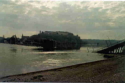
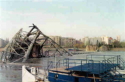
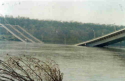
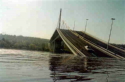
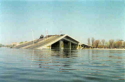
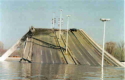
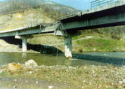
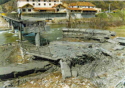
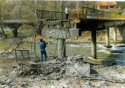
Varadin Bridge in Novi Sad was hit by two missiles and demolished. The
bridge built in 1928 across the Danube, a symbol of Novi Sad, connected
Novi Sad with Petrovaradin and other places on the Srem side of the
river. The entire length of the bridge was sunken. The metal structure
protrudes from the water, while the concrete posts remained undamaged.
The main drinking water pipe, which connected Petrovaradin with the
parts of the city on the Srem side of the river, extended along the
bridge structure. The demolition of the bridge disrupted water supply
to these parts of the city.
Demolition of this bridge will interrupt the traffic on this part of
the Danube for a long time, thus affecting all Danubian countries.
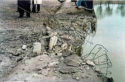
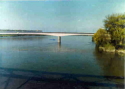
On the same day at 5:05 a.m. the bridge across the Danube, on the Belgrade-Novi Sad road, near Beška, Indjija Municipality, was bombed and damaged. The missile came from the direction of Belgrade and hit 300 meters from the entrance to the bridge, above the first support pillar in the water. The impact damaged 4.5 meters of the metal bridge structure and about 20 meters of metal fence on both sides of the bride as well as the foundation beneath the fence
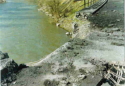
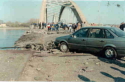
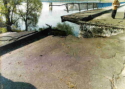
On 3 April 1999 about 7:50 p.m., the NATO aggressors fired three missiles, hitting and demolishing the Liberty Bridge in Novi Sad. One missile struck and sunk the middle of the bridge, while the other hit and brought down the right part of the bridge, on the Srem bank. Five persons were severely wounded and hospitalized, while three persons were injured.
 |
 |
 |
 |
 |
 |
 |
 |
MINUTES OF THE TESTIMONY OF WITNESS
Taken on April 19, 1999 before the investigative judge of the Novi Sad District Court in the criminal proceedings against _________________for the criminal act under Article ______ of the Penal Code.
| Investigative judge Zlata Radić Knežević |
Witness: Željko Čolaković |
|
| Court clerk Ljiljana Vuković |
Also present at the hearing: Public Prosecutor |
|
| The accused | ||
| Defense Counsel |
The hearing began at:
The witness was warned of his/her duty to tell
the truth and not to withhold anything and of the consequences of perjury.
He/she was also warned that he/she was under no obligation to answer
specific questions likely to expose himself/herself or next of kin to
disgrace, considerable material damage or prosecution (Article 229 of
the Law on Criminal Procedure). The witness answered the general questions
as follows:
1) Name and family
name: Željko Čolaković
2) Father's name Momo
3) Occupation salesman, unemployed
4) Domicile Novi Sad, 5 Dragiša Brašovan St.
5) Place of birth Vrbas
6) Date of birth 26 years old
7) Relationship with the accused
and the injured party witness-injured party
With regard to the merits of the case, the witness stated the following:
On April 3, 1999, around 8:00 p.m.,
I was driving from Sremska Kamenica to Novi Sad. At the moment when
my car was somewhere in the middle of the bridge, I heard a bang and
the car started bouncing up and down. At first I thought that it was
bumping against the edge of the bridge, but when the car was later pulled
out of the water, I realized that it had bounced by itself, for there
were no indentations on either side of the car. The car had stopped
diagonally across the driving lane. I told my fellow passengers (my
girlfriend and her mother) to get out of the car. We headed for the
tunnel up the bridge which was already falling down. I saw my car also
falling down into the water and soon only its roof could be seen. When
we almost climbed to the top, we realized that the bridge had been severed
on that side and that we could not go any farther. We decided to go
back towards the water. A policeman who happened to be there in his
private car suggested that we jumped off the bridge. When we climbed
down to the water, a man with a boat came by and took us to Štrand.
When we were about 20 m far from the bridge, on our way to Štrand, another
detonation was heard. The bridge was hit again. Missile fragments and
pieces of the bridge were flying and falling into the water all around
us. After that we went to the Provincial Hospital for examination. It
was established that my lumbar vertebra was fractured. I enclose a copy
of the medical record.
Present on the bridge at the time, besides us,
were the already mentioned policeman, whose name I do not know, driving
an orange van behind us; a taxi driver from "Dunav" association,
driving a Mercedes 123; a boy from Kamenica by the name of Kristijan,
riding a bicycle; and a tall man with a beard, driving an orange van
in the opposite direction. His van has remained on the bridge, while
he crossed over to our lane immediately after the detonation. A young
man driving a "Diana" also crossed over to our lane. His car
went into the river. The young man works as a janitor in an elementary
school at Petrovaradin. We all embarked on the boat and I did not see
that anybody was seriously hurt.
My car, the policeman's orange van and the taxi
were pulled out of the water to the shore by the members of "Vojvodina"
sailing club. The "Diana" was never found as it was probably
washed away by the Danube, while the other orange van is still standing
in the opposite lane of the bridge.
The injured party hereby submits an indemnification
claim.
I have nothing more to declare.
I have listened to the minutes and do not wish
to have them read to me.
| Investigative judge |
Witness-injured party
|
| (sgd) Zlata Radić Knežević |
(sgd) Željko
Čolaković
|
Recording clerk
NOVI SAD CLINICAL CENTRE
Institute for Surgery
7-9 Hajduk Veljko St.
21000 Novi Sad
Urgent surgery ward
telephone: 021 21-338
Date: April 3, 1999
No. of protocol________________
Full name: ŽELJKO
ČOLAKOVIĆ
DIAGNOSIS: Fractura verth.L i. Contusio reg. Lumbalis
Applied: Examination, X-ray (enclosed)
No neurological deficit
Th: resting, analgesics as required, non potest
laborare
Next check-up: In 4 weeks
Doctor's signature,
(sgd) Dr Bojat
Report immediately to your physician.
For the next check-up, please bring a new physician's request and the
previous medical record with diagnosis.
No. Kri - 397/99
MINUTES OF THE TESTIMONY OF WITNESS
Taken on April 23, 1999 before the investigative judge of the Novi Sad District Court in the criminal proceedings against _________________for the criminal act under Article _____ of the Penal Code.
| Investigative judge Aleksandar Tatić |
Witness: Zvonimir Breber |
|
| Court clerk Ljiljana Vuković |
Also present at the hearing: Public Prosecutor |
|
| The accused | ||
| Defense Counsel |
The hearing began at:
The witness was warned of his/her duty to tell
the truth and not to withhold anything and of the consequences of perjury.
He/she was also warned that he/she was under no obligation to answer
specific questions likely to expose himself/herself or next of kin to
disgrace, considerable material damage or prosecution (Article 229 of
the Law on Criminal Procedure). The witness answered the general questions
as follows:
1) Name and family name: Zvonimir Breber
2) Father's name Ljudevit
3) Occupation computer operator, employed at Novi
Sad Town Hall
4) Domicile Novi Sad, 1 Djula Molnar St.
5) Place of birth Titel
6) Date of birth 41 years old
7) Relationship with the accused
and the injured party witness-injured party
With regard to the merits of the case, the witness stated the following:
On April 3, 1999, sometime around 7:50
p.m., or a little later, I was riding a bicycle down the far right lane,
from Novi Sad to Sremska Kamenica. I did not see any other vehicle moving
in the same direction on that part of the bridge. I had with me on the
bicycle a bag with a cellular phone and some clothes. The bridge was
lighted as usual. While I was crossing the bridge and reached the first
third thereof, in an instant I saw a missile, but I did not realize
momentarily that it was a missile coming downstream. At first, I thought
it was a low-flying plane, but then I realized it was a dark object.
Immediately thereafter, it hit the first pillar of the bridge, the one
closer to Novi Sad. A terrible explosion followed and the first third
of the bridge started to collapse into the water, together with me and
the bicycle. This section of the bridge and my bicycle fell into the
river. The bicycle was never recovered. I managed not to fall into the
water. During the collapse of the bridge structure, I sustained severe
injuries because I was lying on the ground. While the structure was
falling, I hit the ground with my chin and broke my jaw and teeth. In
spite of an excruciating pain, I tried to climb up the remaining part
of the bridge and managed to reach the very edge, i.e. the beginning
of the bridge structure closest to Novi Sad. That part of the bridge
structure remained suspended at the height of approximately 6 m. I decided
to jump off the edge and by doing so, I did not fall into the water,
but landed on the soil and most probably remnants of the concrete structure.
Due to the fall, I injured my right leg. Despite that, I somehow managed
to pull myself up and jump over the locked fence of the Štrand beach.
A car stopped and took me to the hospital where I was first taken care
of at the maxillary-facial ward because of the fractured jaw and teeth.
Then I was taken to the orthopaedic hospital for the treatment of my
broken leg. I stayed in the hospital from April 3, 1999 (Saturday) till
Thursday, when I was discharged for further medical treatment at home.
Although I am still not cured, I came to the court today, and after
that I will go for a final check-up of my injured leg. Most probably
I will attach to this statement a complete set of photostat copies of
my medical records in evidence of the injuries I have sustained. On
account of the said injuries, I submit an indemnification claim, but
I will provide specific details thereof at a later stage of the procedure,
pending the final outcome of the ongoing treatment.
I also claim damage compensation for the bicycle
in the value of Din. 2,000 (countervalue of DM 300), and for the cellular
phone in the same amount. I repeat that I reserve the right to state
my definite claim in the course of the subsequent proceeding.
I have nothing more to declare.
I have listened to the minutes and do not wish
to have them read to me.
Investigative judge Witness-injured
party
(sgd) Aleksandar Tatić
(sgd) Zvonimir Brebe
Recording clerk
”25 May” Bridge near Bačka Palanka
On 3 April 1999 at about 8:05 p.m., the enemy NATO warplanes struck the ”25 May“ bridge on the Danube, located between Bačka Palanka and Ilok. One missile hit the bridge on the right side looking towards Ilok and damaged the pedestrian lane about 4 m in length and app. 2 meters in width.
The Bridge near the Village of Jezgrovići
On 4 April 1999 at 11:15 p.m. four airplane missiles were fired in the area of the village of Jezgrovići, Tutin Municipality, two of which hit the bridge on the arterial road Kosovska Mitrovica - Ribarići. The bridge was completely demolished and fell into the river.
On 4 April 1999 at 11:25 p.m. two missiles hit the bridge in Biljanovac on the arterial road Raška-Kraljevo. The bridge sustained considerable damage and the traffic on this stretch of the road is interrupted.
The Railway Bridge in Novi Sad
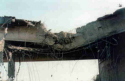
On 5 April 1999 at 9:15 p.m. a concrete railway bridge on the Danube, which connects Novi Sad with Petrovaradin, was struck by two missiles. The bridge was hit in its first segment. About 30 meters of track and power network were damaged as well. Traffic across the bridge is suspended while the necessary repairs are undertaken.
The Bridge on the Ibar near Brvenik
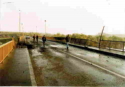
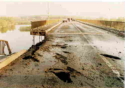
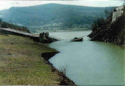
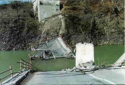
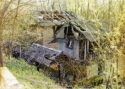
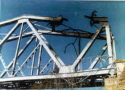
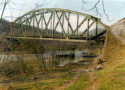
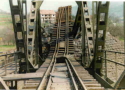
On 6 April 1999 at 3:30 a.m. the bridge for road traffic on the Ibar river in the village of Brvenik, Raška Municipality, was bombed. The bridge was damaged in the area of the supporting pillar, while 20 meters of the roadway on the bridge were destroyed. Due to the effect of detonation, a large number of family houses near the bridge were damaged, as well as the high voltage grid and transformer station.
 |
 |
 |
 |
 |
 |
 |
 |
 |
 |
 |
 |
 |
 |
 |
 |
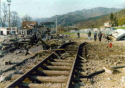 |
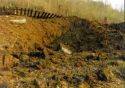
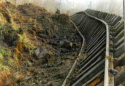
On 6 April 1999 at 3:30 a.m. the railway line Kraljevo-Lapovo was struck with five missiles in the village of Vitanovac. The tracks were damaged in the length of 150 meters. The explosion brought a large quantity of earth on the nearby arterial road, due to which the road traffic was interrupted.
 |
 |
 |
 |
 |
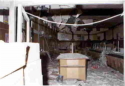 |
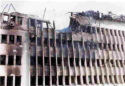
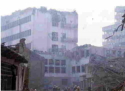
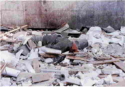
On the night of 11/12 April 1999 Priština and its close vicinity were bombarded. On this occasion the building of Priština Airport in the village of Velika Slatina, Kosovo Polje Municipality, was struck. The administrative and passenger service buildings were completely destroyed, while the auxiliary warehouse was damaged. The passenger service building included an international border crossing, several duty free shops, several travel agencies, offices of Jugobanka and Vojvodjanska banka, a restaurant and rooms for security police.
The Railway Bridge and "Sarajevo" Bridge near Grdelica
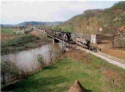
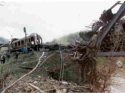
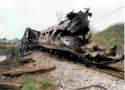
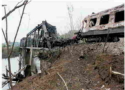
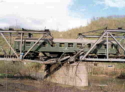
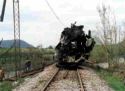
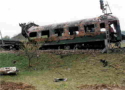
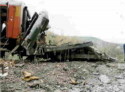
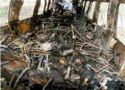
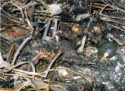
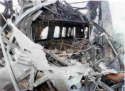
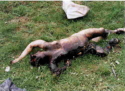
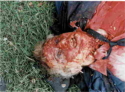
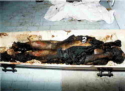
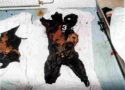
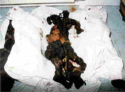
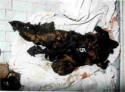
On April 12, 1999, at 11:40 a.m., "Sarajevo" bridge on the road between Leskovac and Vranje, 12 kilometers from Leskovac, was hit by two missiles. Also hit by two missiles was a railway bridge near the town of Grdelica, where a passenger train, from Belgrade en route to Ristovac, was at the time. The train was hit, too. Two carriages were completely destroyed, while other carriages were heavily damaged. Nine persons died. Their bodies were charred. Out of sixteen injured persons, nine were released home after medical examination, whereas seven persons with minor injuries were retained in the hospital in Leskovac for further treatment. During the assault, 15 meters of railway tracks were torn apart, due to which the traffic on this particular railway section was rendered impossible. Also damaged was the telephone coaxial cable which caused the cut off of telephone traffic with southern Serbia, Macedonia and Greece.
With regard to the missile attack on
the bridge in Grdelica gorge and on the passenger train which happened
to be on the bridge at that moment, 12 persons were killed. They were
identified as follows:
Zoran Jovanović (1964) from Niš, Petar Mladenović (1952) from Niš, Verka
Mladenović (1952) from Niš, Jasmina Veljković (1971) from Vranje, Divna
Stanijanović (1959) from Prćilovica village, Aleksinac municipality,
Simeon Todorov (1968), Vidosav Stanijanović (1954), Branimir Stanijanović
(1993), Svetomir Petković (1934), Radomir Jovanović (1954), Ivan Marković
(1973) and Ana Marković (1973) from Leskovac.
Five persons have not been identified.
Three
persons are missing.
 |
 |
 |
 |
 |
 |
 |
 |
 |
 |
 |
 |
 |
 |
 |
 |
 |
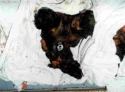 |
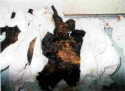 |
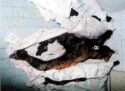 |
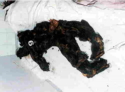 |
Kr. No. 56/99
ON-SITE INVESTIGATION REPORT
Made on April 12, 1999 by the investigative judge of Leskovac Municipal Court, Nebojša Stojičić, regarding a missile attack by NATO warplanes on the highway bridge "Sarajevo", the railway bridge and the passenger train which was near the highway bridge "Sarajevo", in the area of Grdelica, the village of Oraovica mahala "Gornje Polje", in the region of Leskovac municipality.
PRESENT AT THE HEARING
| Investigative judge Nebojša Stojičić |
Forensic inspector Zoran Andjelković |
|
Leskovac police inspectors |
According to the information by the
Leskovac criminal investigation police on duty, a missile attack was
carried out on April 12, 1999 by NATO warplanes on the highway bridge
near Grdelica, the so-called "Sarajevo" bridge, as well as
on the railway bridge and a passenger train in close proximity to the
said bridge. Both the highway and the railway bridges were damaged on
the occasion, while several persons aboard the train were killed, and
many severely or slightly wounded. The investigative judge inspected
the scene together with the criminal investigation police team from
Leskovac and established the following:
The location is secured by members of Leskovac
police forces.
The assault by NATO warplanes on the highway and
railway bridges and the passenger train took place on Monday, April
12, 1999, at 11:40 a.m. The train No. 393 found on the location was
travelling on the Belgrade-Ristovac route. The train was composed of
an electric locomotive and 4 carriages. The train had left Grdelica
station for Vranje at 11:37 a.m.
The so-called "Sarajevo" highway bridge
is located about 2 km from the highway exit towards Grdelica, southwards
in the direction of Vranje. The bridge represents a segment of the international
highway Belgrade-Niš-Vranje-Yugoslav border-Macedonia. It is about 200
meters long, in the shape of an arch curving to the right towards Vranje.
The bridge has two lanes of the total width of 8 m and elevated pedestrian
lanes 60 cm wide and 0.60 m high, with a metal fence made of metal pipes
of 8 cm in diameter. At the very point where the bridge begins, on the
right-hand side in the direction of Vranje, there is a crater in the
nearby ground and the damage of the bridge asphalt and metal structure
3 m long, at about 1 m from the right edge of the bridge, along the
line north-south (Leskovac-Vranje). Several telephone and other cables
were cut at the place of damage. Traces of scorched earth are noticeable
in the large area of surrounding land, probably caused by heat from
the missile launched from a plane. In the middle of the bridge, where
wire mesh is installed for protection from the electrified railway lines
running under the bridge, also on the right-hand side in the direction
Vranje, another damage was detected caused by a second aircraft missile.
It covers the entire right lane in the direction of Vranje (north-south),
i.e. Leskovac-Vranje and is about 6 m long. There is a round hole in
the concrete of about 2.5 m in diameter. Parts of twisted, but not completely
cut reinforcement bars can bee seen through the hole. The fence and
the pedestrian lane are completely destroyed. On the opposite side of
the bridge from the above damaged place, the left-hand side of the pedestrian
lane and metal fence (towards Vranje) are also damaged. Otherwise, the
bridge sustained no other damage. According to the information gathered
on the spot, there are no damaged vehicles on the bridge or casualties.
On the east side of the above described highway
bridge (so-called "Sarajevo" bridge), at about 100 m straight
distance, i.e. on the left-hand side of the bridge facing Vranje, there
is a railway leading from Leskovac to Vranje, via Grdelica, and then
further towards the Yugoslav-Macedonian border. By turning right, the
railway passes under the mid-bridge and is about 30 m below it. At the
section of the railroad between that point and 30 m onwards towards
Vranje, an electric locomotive No. 441-420 of the train Belgrade-Ristovac
No. 393 was sighted. Apart from the broken glass, there is no other
major damage on the locomotive metal structure. All its wheels were
on the tracks. Since the railroad electrical installation was ruined,
the locomotive was not in contact with it. Behind the locomotive, northwards
in the direction of Leskovac, the first carriage is also fully positioned
on the tracks. Its windows are broken and the rear end of its roof is
dented downwards. There were no casualties in the carriage, nor any
traces of blood, human tissue, organs, etc. The second carriage was
found coupled to the first carriage. However, only one quarter of the
front part of it was coupled to the first carriage because the carriage
was directly hit by a missile and split in two in the area of front
wheels. This part of the carriage is completely demolished, metal sheets
are horribly distorted and torn with visible traces of explosion and
fire. Completely ruined are paint, windows and all interior parts which
are not made of hard metal. There were no casualties in the carriage,
nor any traces of blood, human tissue, organs etc. The second part of
the carriage (3/4) was found at about 50 m away from the first part,
backwards toward south and north (Leskovac), and about 30 m from the
southern end of the railway bridge. This part is entirely demolished
and extremely deformed - there is no roof, the sides are either blown
away or compressed towards the floor. All this was caused by the missile
impact and subsequent detonation and fire. It should be noted that strong
odour of explosive could be felt during the investigation and it still
persists. The carriage and all non-metal parts are completely destroyed.
In this part of the carriage, 7 totally charred bodies were found, covered
with metal pieces from the carriage interior and burnt remnants of non-metal
parts. This other part of the carriage is positioned partly on the tracks
and is partly derailed because of the damaged tracks behind it. The
third carriage is coupled with it. Its rear part is exactly on the southern
end of the railway bridge, whereas its front part is facing south towards
Vranje. This section of the railroad is slightly damaged. The carriage
is partly derailed, but not overturned. This third carriage is completely
destroyed, probably by a direct missile hit. Strong odours of gunpowder
gases can be felt on the site of fire and around it. The only part left
is the carriage chassis. Everything else is destroyed - glasses are
broken, metal parts are terribly smashed, torn, bent or missing. Some
metal pieces were found as far as 30 m from the carriage. Except for
metal parts, non-metal parts were not found, nor the bodies of passengers,
human tissue, or anything else. However, this is probably due to the
effects of a direct impact of an aircraft missile which left behind
nothing but extremely deformed and twisted metal parts which have clearly
visible traces of being exposed to high temperature.
At about 20 m from the rear part of the third
carriage backwards towards north (Leskovac), the front part of the fourth
carriage was found in the middle of the bridge. It is partially derailed
and remained on the bridge which itself is damaged, but not to the extent
which would cause dislocation or sinking of the tracks. The fourth,
and last, carriage is not completely destroyed. There are no traces
of fire, explosion or alike, although all the windows and inside doors
are broken and twisted from detonation. There are no casualties in the
carriage, nor traces of tissue, organs, etc. The carriage is above the
mid-stream of the river Južna Morava which runs 10 m below the bridge.
The railway bridge itself is damaged in the middle,
close to the spot where the fourth carriage was found, as well as on
the southern side to the right, i.e. on the south-western rear end of
the metal structure whose parts have fallen off or are twisted.
Apart from the described damage
on the railway and highway bridges, substantial damage was inflicted
on the house of Vladimir Nikolić from Oraovica mahala "Gornje polje"
located approximately 100 m to the west from the
railway bridge and slightly above the level of the railway bridge. The
windows of the house are broken, the roof is considerably damaged and
the walls of the house have cracked. On the opposite west side of the
bridge, about 50 m away, three houses and farm buildings are damaged,
owned by Borivoje Kostić
from Oraovica, mahala "Gornje Polje". The window panes are
broken, roofs are considerably damaged and some of the walls have cracked.
Apart from the mentioned houses, there are no
other houses in the vicinity of these bridges.
Two dead bodies were found beside the train -
one on the east side of the locomotive and the other one on the east
side of the rear part of the second carriage.
The total of nine dead bodies were found
next to the train: five adult males and four adult females. The following
have been identified so far:
1. Zoran Jovanović,
father's name Jugoslav, born 28 February 1964, resident address: Niš,
87 Knjaževačka St.
2. Petar
Mladenović, father's name Stanko, born 29 July 1952, resident address:
Niš, 4/11 Dimitrije Tucović St.
Identification of the remaining seven
bodies has not been performed at this stage. According to the pathologists
from Leskovac hospital and the situation on the spot, the identification
will be very difficult since the bodies are completely charred, including
the teeth. To facilitate the identification, jewelry and small burnt
pieces of clothes have been taken off the bodies.
Sixteen wounded persons were admitted to the hospital
in Leskovac and their identity has been established by inspectors of
the Leskovac police.
In addition to the 9 bodies, parts of the body
of one or more persons were found in the burnt rear part of the second
carriage: one segment of a rib cage, one right foot and one left lower
leg with foot.
At this particular stage of the procedure it is
impossible to determine the total number of killed passengers in view
of the degree of damage inflicted on the second and third carriages,
and especially the total devastation of the third carriage and the unknown
number of passengers in the third carriage. Based on the statements
of eye-witnesses, a number of passengers from the fourth carriage were
thrown by detonation to the torrential Južna Morava river. Therefore,
the criminal investigation police of Leskovac was instructed to find
out, through competent administration services and field work, the exact
number of passengers on board the train at the time of its departure
from Grdelica station, with a view to establishing the number and identity
of the killed people.
According to initial information, statements of
eye-witnesses and the damage of bridges, 4 aircraft missiles of unknown
type were fired. Pieces of missiles were not found on the location and
its surroundings. Two missiles hit the highway bridge (so-called "Sarajevo"
bridge), and another two hit the train en route Belgrade-Ristovac which
happened to be on the bridge at the time of the attack. There are no
traces of direct aircraft missile impact on the bridge. Thus, it may
be stated with certainty that one or two missiles hit the second and
third carriages of the passenger train.
The forensic inspector present on the spot has
photographed the location and those photographic documents will constitute
an integral part of this report.
Following the order of the chief of criminal investigation
police of the Republican Ministry of the Interior, broad and close-up
shots of the location, as well as the damage of bridges and other objects,
have been taken by a video camera. This VHS video tape will also constitute
an integral part of this report.
The investigation
commenced on April 12, 1999 at 12:50 p.m. and was concluded at 9:45
p.m. of the same day.
April 12, 1999, LESKOVAC MUNICIPAL COURT
| Recording clerk (sgd) Ljubiša Stanković |
Investigative judge (sgd) Nebojša Stojičić |
OFFICIAL MEMO
Made on April 12, 1999 by an authorized
official of the Leskovac police department, regarding the inspection
of the scene and informative interviews with eye-witnesses of a NATO
attack on the passenger train No. 393, travelling on the Belgrade-Thessaloniki
route, and the so-called "Sarajevo" bridge.
On April 12, 1999, around 12:30 p.m., after the
inspection of the scene on which a separate report was made, we proceeded
with searching for eye-witnesses.
An informative interview was conducted with Živojin
Stanojević, born 31 July 1935 in Bojišina, permanently residing in Grdelica,
130 Bora Pešić Street, a bridge guard and civil defense commissioner.
In the course of the interview, he stated that on April 12, 1999, at
approximately 11:40 a.m., he was near the so-called
"Sarajevo" bridge when he heard the buzzing sound of an airplane
which came from the west and flew over the "Sarajevo" bridge.
Immediately thereafter, another plane came and fired two missiles. The
first missile hit the central part of the railway bridge, and the second
one hit the second carriage of the train. Soon after that, one more
aircraft flew in and also fired two missiles which hit the middle and
foremost parts of the so-called "Sarajevo" bridge, viewed
from the direction of Leskovac.
Živojin Stanojević, the eye-witness, Predrag Stoiljković from Boćevica
and a few other persons immediately started rescuing and helping the
passengers who were trying to get out of the first carriage through
windows and doors. Živojin noticed that there
were many wounded persons among them. Since the second, third and fourth
carriages were on fire, he could only hear the screams and cries of
passengers. Živojin assumes that the passengers from the other half
of the third carriage fell together with that part of the carriage into
the river Južna Morava and were beyond help. After the intervention
of the fire brigade, Živojin inspected the burning carriages and, according
to his words, saw 8 scorched bodies.
During an initial inspection of the first carriage,
we found a green bag with a passport in the name of Živojin Pavlović,
an engine driver from Niš. We also found a black bag and a black leather
jacket which we identified, with the help of Miodrag Živković, assistant
in the railway transport unit, as the belongings of Vesna Veljković
from Ristovac.
The above statement of eye-witness
Živojin Stanojević was corroborated by Predrag Stoiljković from Boćevica
who was also an eye-witness of the event and took part in rescuing and
pulling out of injured passengers from the train.
Criminal investigation police officer
(sgd)
Ljubiša Kitanović, sergeant major
OFFICIAL MEMO
Made on April 12, 1999 by an authorized
official of the Leskovac police department, regarding the NATO warplanes
missile attack on "Sarajevo" bridge and the railway bridge,
both on the river Južna Morava, near Grdelica, Leskovac municipality.
On April 12, 1999, at about 11:39 a.m., the NATO
aggressor launched an attack with three warplanes on the above mentioned
bridges. The first plane flew over the bridges, the second one fired
two missiles hitting the railway bridge and the passenger train on it,
while the third plane struck the so-called "Sarajevo" bridge
with two missiles. During the attack, two railway carriages, the second
and the third, were directly hit which caused the death of nine people,
out of whom seven are completely charred, and two partially burned in
the fire which caught the carriages after the missile assault.
A railway section crew from Niš was found on the
spot and it attended the
investigation conducted and assessed the damage on the railway bridge.
Andjelković Zoran, chief engineer for bridges with ZOP Niš, was interviewed.
He stated that the foremost part of the railway bridge from the direction
of Leskovac is approximately 30% damaged, while
the remaining part is approximately 10% damaged. The said assessment
refers only to the bridge structure, while 15 m of the bridge railway
tracks are torn apart.
Also interviewed was Miroslav
Stojanović, head of the electrical system maintenance
crew from ETP Niš, who stated that about 300 meters of the contact line
was cut and its three poles completely damaged. In his opinion, the
repair would require between 5 and 6 hours.
During the NATO aggressor's missile attack, also
hit was the highway bridge (so-called "Sarajevo" bridge) causing
the damage of the bridge structure and breaking the international PTT
coaxial cable which resulted in the cutting of telephone lines with
the southern part of Serbia, Macedonia and Greece. A "Telekom Srbija"
crew arrived on the site and began repairing the cable breakage about
4-5 m long.
On the train and in its immediate surroundings,
the total of nine dead bodies were found of adult males and 4 adult
females. Four bodies have been identified so far. These are:
1. Zoran Jovanović,
father's name Jugoslav, born 28 February 1964, resident address: Niš,
87 Knjaževačka St.
2. Petar Mladenović, father's
name Stanko, born 29 July 1952, resident address: Niš, 4/11 Dimitrije
Tucović St.
3. Verka Mladenović, born
21 March 1952 in the village of Kopanjce, Vranje municipality, resident
address: Niš, 4/11 Dimitrije Tucović St.
4.
Jasmina Veljković, father's name Nikola, born 1971 in the village of
Gornje Trebišnje, Vranje municipality, resident of Vranje, address unknown.
All the bodies were transported to the
chapel of Leskovac hospital where identification of other bodies will
be made.
In view of the fact that the two carriages
which happened to be on the bridge during the attack are completely
ruined, and according to eye-witnesses, it is possible that the number
of killed and wounded persons is larger, especially since quite a few
passengers were thrown by detonation into the torrential Južna Morava
river. Therefore, Leskovac Police Department sent out a circular dispatch
No. PU 834/99 aimed at collecting information on the passengers who
were on board the train at the time of bombardment by the NATO enemy
forces.
Criminal investigation police captain
(sgd)
Goran Mitić
EXPERT FINDINGS
Upon
request of Nebojša Stojičić, the investigative judge of Leskovac Municipal
Court, I was appointed court expert for the purpose of this investigation
procedure.
In complying with the court order, a civil engineer
expert is hereby presenting his professional findings and opinion on
the assessment of civil engineering reconstruction costs relating to
the damage inflicted on the highway and railway bridges in Grdelica.
The expert investigation was made on April 13,
1999.
By means of a direct on-site inspection and measurements
taken, the following findings were made as to the state of affairs:
Attached herewith are sketches and layouts of
both bridges.
By means of a direct visual on-site inspection
carried out on April 13, 1999, the following findings were made contained
in separate technical descriptions of the damage sustained by the two
bridges.
TECHNICAL DESCRIPTION OF DAMAGE ON THE HIGHWAY BRIDGE
The said bridge is located on the main
road M1, at 864 km + 600 m.
This bridge, as well as the railway bridge, was
damaged on 12 April 1999 at 11:50 a.m. by missiles fired from the air.
The bridge is 205.70 m long, with a span of 197.50
m. The entire length of the bridge is curve shaped. The bridge is made
of reinforced concrete. In the northern part (from the direction of
Leskovac) it has an arch buttress of 18.6+3x16.8+3x16.8 m span. The
southern section of the bridge is a continuous girder support made of
reinforced concrete.
Two missiles caused the following damage:
One missile damaged the northern entrance of the
bridge in the area of the protective embankment. The upstream right
wing and the concrete cover upholding the embankment are damaged. On
the right-hand side (upstream) part of the pavement there is a crater
about 4-5 m deep and about 5 m in diameter (cross-section 2-2 shown
in the attached sketch).
The second missile damaged the southern section
of the bridge. The location of the damage is on the fourth buttress,
viewing from the arch end towards south, i.e. the right river bank.
The railway runs between the fourth and fifth buttresses (cross-section
1-1). The railway bridge is situated 50 m downstream from the highway
bridge.
Owing to a direct missile impact, the main right
(upstream) support is destroyed, together with the pedestrian lane and
fence. Part of the concrete structure of 4 m in diameter is completely
gone. The main supporting reinforcement is protruding and noticeably
distorted and torn apart. On this cross-section (2-2), the secondary
impact of the missile on the railway bridge caused the damage 6 m long
on the left (downstream) pedestrian lane and fence. The concrete there
is partly broken off and deformed.
The cross-section (1-1) represents the above described
damage at the point of the railroad passage under the highway bridge.
I
note that the technical description of the damage made after the visual
inspection needs to be supplemented by a detailed inspection of the
bridge structure, its static stability and bearing capacity. Subject
to those findings, a permanent technological solution for reconstruction
will be proposed. The cost of repair works is given for visible damage
described in the technical description.
TECHNICAL DESCRIPTION OF DAMAGE ON THE RAILWAY BRIDGE
The metal bridge is 37.5 x 2 = 75 m
long. Two sections are divided by a central buttress made of stone,
as well as the two river bank supports.
One missile partially destroyed the right-hand
side river bank support and the entire bridge structure on that side
- both the upper and lower metal structures and one section of lattice
girders.
The left-hand half of the bridge, at the entry
side from Leskovac, is completely destroyed. The lower structure is
dislocated and broken at its upstream part towards the river. The entire
cancellated bearing structure on both sides of the bridge is damaged
at the mentioned point, as well as the upper bracing.
The damage is such that the possibility of any
reconstruction is ruled out. The demolished structure will have to be
removed and a new bridge constructed, as indicated in the reconstruction
assessment specification.
Also completely destroyed is about 200 m of the
railroad superstructure, sleepers, rails and auxiliary elements.
About 300 m of high voltage lines have been destroyed,
including metal high voltage poles in the length of 150 m.
The infrastructure installations running along
the bridges, such as telephone installations and alike, are not subject
to description and evaluation of this expert.
ASSESSMENT OF CIVIL ENGINEERING COST OF RECONSTRUCTION WORKS
HIGHWAY BRIDGE:
Cross-section 2-2 damage:
Repair of concrete structure, embankment and pavement
...................... Din 150,000
Cross-section 1-1 damage:
Repair of main longitudinal buttress, pavement
and pavement plate,
pending inspection of the structure condition ...............................................
Din. 3,700,000
Total costs: Din. 3,850,000
RAILWAY BRIDGE
Reconstruction works include complete
removal of the existing damaged bridge and construction of a new steel
bridge of the same characteristics - two sections with the span of 75
meters.
Cost evaluation:
400,000 Din/m x 75 m = Din. 30,000,000
SUMMARY OF RECONSTRUCTION COSTS:
- Highway bridge ........................................................................................
Din 3,850,000
- Railway bridge .......................................................................................
Din 30,000,000
Grand total: Din. 38,850,000
The above evaluation is made as at 13
April, 1999.
Leskovac, April 13, 1999
Permanent Court Expert for
Civil Engineering
Dušan Kalijadis, B.Sc. Civil Eng.
Pursuant to resolution of Ministry
of
Justice of Serbia No. 740/0310/92
Republic of Serbia
Ministry of the Interior
Leskovac Secretariat
Entry No. /KU,PU,D/834/99
K.T. entry No. 401 212 / 99
OUP code entry No. year
Date: 12 April, 1999
REPORT
on forensic and technical on-site inspection
regarding
missile attack by NATO warplanes
1. Type of act or event:
2. Place and date: Near Grdelica towards Vranje
at the so-called "Sarajevo" bridge and the railway bridge
on the river Južna Morava, 12 April, 1999
3. Involved: Investigative judge of Leskovac Municipal
Court and a police officer
4. Method: NATO aircraft fired missiles at the
so-called "Sarajevo" bridge, the railway bridge and the passenger
train
5. Performed criminological and technical operations:Photographing
and video shooting of the location
6. Clues and objects found:
a) Traces of papillary lines (place of discovery,
developing and fixing methods)
b) Other clues and objects found in the location (type of clues, place
of discovery and method of fixing) and remarks of relevance for further
treatment of clues
A fragment of the missile printed board was found, parts of passenger train carriages and nine scorched and partly charred bodies.
Forensic technician,
(sgd) Zoran Andjelković
No. Kri - 453/99
MINUTES OF THE TESTIMONY OF WITNESS
Taken on April 27, 1999 before the investigative judge of the Belgrade District Court in the criminal proceedings against John Doe for the criminal act under Articles 141, 142, 148 of the Penal Code of FRY.
| Investigative judge Ilija Simić |
Witness: Petar Mihajlović |
|
| Court clerk Stana Mitrić |
Also present at the hearing: Public Prosecutor |
|
| The accused | ||
| Defense Counsel |
The hearing began at 10:30 a.m.
The witness was warned of his/her duty to tell
the truth and not to withhold anything and of the consequences of perjury.
He/she was also warned that he/she was under no obligation to answer
specific questions likely to expose himself/herself or next of kin to
disgrace, considerable material damage or prosecution (Art. 229 of the
Law on Criminal Procedure). The witness answered the general questions
as follows:
1) Name and family name:
Petar Mihajlović
2) Father's name Milan
3) Occupation pensioner
4) Domicile Belgrade, 50/39 Stevan
Opačić Street
5) Place of birth Village of Gornje Kormiljane
near Kosovska Kamenica
6) Date of birth 17 June 1927
7) Relationship with the accused or
the injured party injured party
With regard to the merits of the case,
the witness stated the following:
The witness was reminded and warned to tell the
truth, and then gave the following answers to the questions asked by
the court:
I have been living in Belgrade since 1974 with
my wife and three sons.
In my home town I have a house which I use as
a summer house.
When the bombardment of Belgrade started, I wanted
to leave Belgrade and find shelter. Therefore, on 12 April 1999 I took
a train from Belgrade to Ristovac. We set off from Belgrade around 6:30
a.m. I was in the second carriage from the locomotive. In our compartment
were two brothers from Vladičin
Han whom I did not know before. The journey was regular and nothing
unusual happened on the way.
Around 11:30 a.m., after having passed Grdelica,
we were on the bridge on the river Južna Morava. Suddenly I heard a
strong bang. At first I did not know what had happened. Only later did
I realize that our train was bombed. For a while I was not completely
conscious and through a kind of mist I saw chaos all around me. I was
in a destroyed carriage with only its skeleton left. Suddenly, a young
man was beside me offering help. Our carriage was leaning towards the
river and somehow, with the help of the young man, I managed to pull
myself out of the debris. He also helped me walk towards the highway
which was around 100 m away.
When I reached the highway I saw that the locomotive
and the first carriage was about 100 m from the bridge. The remnants
of three carriages were on the broken bridge. While I was getting out
of the carriage I could smell smoke. When I came to the highway I saw
that all three carriages which remained on the bridge were on fire.
A large flame burst and the wind was carrying the smoke while I was
heading for the highway.
I was injured during the explosion. I had cuts
and bruises and could barely walk. I was given first aid in Grdelica
and thereafter transported to the hospital in Leskovac where I also
received medical care - bandages and an injection. At the time I did
not feel much pain, but now I have pains in my back which force me to
stay in bed most of the time. I hardly found strength to come today
before this court and make a statement.
Therefore, I cannot say how the bombardment of
our train occurred. It was completely unexpected for me. I was not aware
of what had taken place and only now I realize that our train was bombed.
I do not know what has become of the other two
passengers who were with me in the compartment. I do not know how many
people were on the train and how many were killed. I also do not know
the number of wounded people, except that six of us were transported
in a van first to Grdelica, and then to Leskovac.
Electric power was cut in Grdelica so that there
was no electricity in the health centre.
My personal luggage consisted of two bags which
were lost.
This is all I have to say.
I
listened to the dictation of this record, I acknowledge it as mine and
sign it without any objections.
Ended at 11:30 a.m.
(sgd) Petar Mihajlović
| Recording clerk (sgd) Stana Mitrić |
Investigative judge (sgd) Ilija Simić |
148/99-16
AUTOPSY REPORT
| Name and surname: Zoran Jovanović | Date of birth: 28 February 1964 | |
| Place of birth: Niš | Admitted for treatment: / | |
| Domicile: Niš | Died on: 12 April 1999 at 11:40 a.m. | |
| Occupation: Railway worker | Autopsy performed on: 13 April 1999 |
|
Clinical diagnosis:
|
Autopsy requested by:
Nebojša Stojičić, Investigative judge of
the Municipal Court in Leskovac |
According to received investigation
data the victim was killed in the bombed train on the bridge near Grdelica.
IDENTIFIED
on grounds of personal documents that were found on the victim, and
recognized by close relatives.
External findings on the corps
The corps was brought in a railway workers'
uniform, which has several greasy smears on it and smells of smoke.
The uniform is torn at several places and around most of these torn
places are large irregular shaped bloodstains.
After the clothes had been taken off the corps
the following was found:
It is a male corps, about 35 years old, 173 cm
long, medium skeleton and muscles build, and well nourished. Rigor mortis
present in all joints. Minor and singled death spots, mostly present
on the back.
Graying hair, about 5 cm long. Eyelids are closed,
anemic conjunctiva, greenish iris, and round pupils of equal size.
There is no foreign content in the ear cavities.
Both nasal cavities are filled with moderately
clotted blood.
There is also moderately clotted blood in the
mouth cavity. Some of the teeth are missing, mostly anterior and left.
Short normal neck. Lymph glands and thyroid gland
are normal. Cylinder shaped and symmetric thorax.
The abdomen is slightly above the level of the
chest.
Male pubic eminence. There is no foreign content
in the genital and anal holes.
There are no congenital deformities on the upper
and lower limbs.
There is an irregular gaping wound on the right
side of the neck, medially, which is 12 cm long and about 9 cm wide.
The edges and sides of the wound are ragged and bruised. Above and below
this horizontal wound the muscles are completely cut and torn and the
brachial plexus nerves, right carotid artery, and right jugular vein
are exposed. The superior and inferior sides of the laceration meet
deep in the neck, exposing in the level of the thyroid gland cartilage
the torn and severely mechanically damaged larynx. The esophagus, which
is gashed under the larynx, and the crushed 4th and 5th cervical vertebrae,
are also exposed. In fact, these vertebras are not distinguishable because
their small fragments are mixed with pieces of security glass, plywood
and rusty iron chips. The spinal cord in this region resembles a grayish
mass pouring from within, and it is mixed with blood and plywood. There
is a small quantity of moderately clotted blood in the retracted blood
vessel ends. There is an irregular linear wound 3 cm long just below
the right auricle. It is horizontal, 5 mm deep, and its sides and edges
are rough and bruised.
On the right side of the nose, 3 mm above the
nostril, there is a horizontal linear laceration 2 cm long and not more
than 2 mm deep, with bruised edges.
There are two oval lacerations on the left side
of the neck, medially, one 5 and the other 7 mm long, with crushed and
bruised edges and sides and with pieces of security glass in each. There
is a rhomboid laceration under the left auricle and above the temporal
mandibular joint. It is the size of 2 x 1 cm and it is full of security
glass pieces and rusty metal chips. The edges and sides of this laceration
are ragged and the wound reaches down to the bone. Multiple fractures
were found by palpation on the left side of the mandible.
There is an oval 1 cm long laceration in the left
corner of the lips which has the same characteristics as the previously
described wounds.
On the left shoulder, anterior, there is an oval
laceration 2 cm long, reaching down to the synovial membrane.
There are various irregular bruises and excoriation
on the thorax, anterior, and on the abdomen.
There is a horizontal linear laceration 2 cm above
the left knee. It is 9 cm long with its bottom reaching the femoral
bone.
By palpation it was found that the left femoral
bone, medially, is completely fractured and the ends of the bone can
be parted.
There are many small linear cuts on both backs
of the hands.
There are no other injuries or changes
found on the body.
INTERNAL FINDINGS
Head and neck
The scalp tissue on the forehead and
in both temporal regions is colored by blood. The vertex is pear-shaped,
the size of 17 x 13 cm and 5-7 mm thick. There are no fractures on the
vertex and skull base. There is a small quantity of liquid blood in
the dura and pia mater straits. Standard contents in the cranial ventricles.
Mild aterosclerosis in the artery circle in the base of the brain. There
is no foreign content in the fossa Silvi. Anemic ependyma in the cranial
cavities. Clear liquor. The sections of the cranial parenchyma show
mildly anemic tissue.
The right lobe of the thyroid
gland is totally destructed, as well as the larynx cartilage in this
region (see previous description). The esophagus in this region is also
torn. The 4th and 5th cervical vertebrae, as well as the spinal cord
in the cervical region, are completely destructed.
Thorax and abdomen
On the left thoracic wall, medially,
the 2nd - 6th ribs are fractured and the pleura in these regions is
partly torn by the sharp bone-ends impacted into the thoracic cavity.
On the right side of the thorax the 1st and 2nd
ribs are fractured in the same manner as those on the left side.
The right upper and both left pulmonary lobes
have torn pleura and the parenchyma in the torn regions is bruised (by
the impact of fractured ribs).
There is about 150 ml of liquid blood in the right
side of the thoracic cavity, and about 100 ml in its left side.
Small fragments of plywood and security glass
pieces are found from the place where the larynx was completely destructed
(the major destruction on the right side of the neck) down to the 2mm
wide bronchiole. These are mixed with a slimy mass which has some traces
of blood in it. Some sections of lung parenchyma show regions of strong
blood coloration at places where the parenchyma was damaged by the sharp
rib ends. The remaining blood tissue is very anthracotic.
The cardiac sac is normal and the heart corresponds
to the age and height of the victim. All cardiac valves are normal.
The left chamber muscle is slightly thick (20 mm) and the entire myocard
is mildly pale. Mild aterosclerosis in nutritive and functional blood
vessels in the heart showing no signs of degeneration. There are three
dot-like bruises under the left ventricle endocard.
There is about 100 ml of liquid blood in the abdominal
cavity, the result of the spleen bleeding. Namely, there is an irregular
linear split on its capsule superior end, through which one can almost
reach the hilus. The gap is filled with moderately clotted blood.
The
liver, pancreas, kidneys, prostate, urethra and urinary bladder are
normal and correspond to the victim's age. The contents in the stomach
and intestine are standard and don't smell of alcohol.
Muscles and bones
All bones of the head, trunk and limbs have been examined and no other changes have been found, except for those described.
PATHOLOGICAL-ANATOMIC FINDINGS
Mors violenta. Destructio medullae spinalis partis cervicalis. Effusio sanguinus. Sectio traumatica arteriae carotis dextrae et venae jugularis dextrae. Destructio plexus brachialis dex., sternocleidomastoidei et musculorum coli lat. dex. Destructio corporis vertebrorum cervicalis IV et V. Haematothorax et haematoperitoneum. Fracturae costarum II;VI lat. sin. et I-II lat. dex. Rupturae pulmonuum. Ruptura lienis. Fractura femoris lat.sin. Fracturae mandibulae lat. sin., multiplices. Vulnera lacerocontusa cutis regi omnibus gomi sinistri, faciei, femoris sin. et thoracis anterior lat. sin. Contusiones cutis corporis et capitis multiplices.
CONCLUSION
I The death was violent and it was caused
by several factors:
- destruction of the cervical spinal cord,
- tearing of major artery and vein blood vessels,
- multiple and bilateral destruction of the lung
parenchyma,
- multiple fractures of ribs, femoral bone, and
of facial bones, and
- ruptured spleen with bleeding into the abdominal
cavity.
Because of these injuries blood circulation and
breathing stopped instantly, causing death.
II All the above mentioned injuries were inflicted
while the victim was still alive.
III The injuries were inflicted by very strong
blows with both sharp and blunt mechanical weapons.
IV Security glass pieces, rusty metal chips, and
plywood were found in most of the damaged tissue, which implies that
the accident could have happened in a train, since it does have this
kind of glass, metal and wood.
V There is no doubt
that such injuries imminently caused death.
Dr Milosav D. Stefanović,
Master of Medicine
Pathologist
148/99-17
AUTOPSY REPORT
| Name and surname: Petar Mladenović | Date of birth: 29 July 1952 | |
| Place of birth: v. Preobraženje, Vranje | Admitted for treatment: / | |
| Domicile: Niš | Died on: 12 April 1999 at 11:40 a.m. | |
| Occupation: Railway worker | Autopsy performed on: 13 April 1999 |
|
Clinical diagnosis:
|
Autopsy requested by:
Nebojša Stojičić, Investigative judge of the Municipal Court in
Leskovac |
According to received investigation
data this is one of the victims killed in the bombed train on the bridge
near Grdelica.
IDENTIFIED on grounds of personal
documents that were found on the unburned parts of the victim's clothes,
and also recognized by close relatives.
External findings on the corps
A male corps, about 45 years old. About
90% of the skin is carbonized. Both feet and two thirds of the shin
are missing. The remaining part of the corps is 130 cm long. Rigor mortis
present in all non-carbonized joints. The corps has the so-called combat
posture.
The entire scalp is carbonized. The earlobes and
parts of the nose are burnt. The lips are carbonized. The right side
of the vertex is completely missing. There are contours of the cerebrum
and cerebellum in the cranial cavity. The right eyeball is missing and
the left one is carbonized. The mandible bones break on attempts to
open the mouth. The teeth and tongue are carbonized. The right forearm
is torn away from the carbonized elbow joint and it is missing.
The wall of the right side of the thorax and abdomen
is missing. The partially burnt right lung wing, right side of the heart
and liver, and part of the omentum and carbonized right kidney are protruding
from this gape.
The edges from where the parts
of the thoracic cavity and abdomen were torn away are ragged, carbonized
and brittle, and they have many splits and cracks extending to the middle
of the trunk, both anterior and posterior. Cutis of the scrotum has
major albuminous degeneration. Cutis of the penis is partially carbonized.
The skin and superficial muscles on the shin stumps are carbonized as
well as the remaining bones in this region.
INTERNAL FINDINGS
Head and neck
The remaining left side of the vertex,
which isn't carbonized, is brittle and it crumbles easily. The brain
is carbonized.
The thyroid gland is missing. The
larynx cartilage is carbonized.
Thorax and abdomen
The remaining left side of the thoracic wall has major albuminous degenerative changes. The right lung wing is amorphous because it is carbonized, as well as the right side of the heart and major arteries in this region. The left lung wing has albuminous degeneration, and it is shrunken and almost dry. The left side of the omentum, stomach and parts of the intestine and colon in this region of the abdominal cavity have suffered minor albuminous degeneration. However, they haven't generally changed in appearance and are slightly shrunken.
Muscles and bones
The parts of the skin that are not carbonized have mostly 3rd degree burns. The exposed muscles are bruised and are light red.
PATHOLOGICAL-ANATOMIC FINDINGS
Carbonisatio cerebri et cerebelli, pulmonis
dextri, cordis, hepatis, renis dextri, omenti lat. dex., cruris bilateralis
et mani dex. et cutis et musculorum corporis, extremitatis et capitis.
Degeneratio
albuminosa pulmonis sinistri, renis sinistri, testis, ventriculi intestini
jejuni et illei et colonis.
CONCLUSION
I Violent death, the result of the brain
and all the vital centers in it being burnt. The burning of the right
lung wing and of the right side of the heart resulted in instant cessation
of breathing and blood circulation.
II The mentioned carbonization of the other parts
of the body could also have caused instant death.
III These injuries are the result of the body
being exposed to extremely high temperature and flames.
IV
There is no doubt that such injuries imminently caused death.
Dr Milosav D. Stefanović,
Master of Medicine
Pathologist
148/99-18
AUTOPSY REPORT
| Name and surname: Simeon Todorov | Date of birth: 26 October 1968 | |
| Place of birth: v. Dukat, Bosilegrad | Admitted for treatment: / | |
| Domicile: Stalać | Died on: 12 April 1999 at 11:40 a.m. | |
| Occupation: unknown | Autopsy performed on: 13 April 1999 |
|
Clinical diagnosis:
|
Autopsy requested by:
Nebojša Stojičić, Investigative judge of
the Municipal Court in Leskovac |
According to received investigation
data this is one of the victims killed in the bombed train on the bridge
near Grdelica.
IDENTIFICATION: His mother recognized
the unburned part of the trousers and gave a description of her son,
mentioning specific details: short, narrow hips and shoulders, protruding
mandible incisors and partly overlapping teeth, which couldn't fit properly
in the small jaw.
External findings on the corps
Carbonized male corps of undetermined age. The remaining part of the body is 95 cm long. Rigor mortis in the remaining joints. The entire skin is completely carbonized.
Head
The skull, brain, face, and mouth cavity are completely missing. What can be recognized in the remaining carbonized parts of the head are the mandible anterior, with incisors and eyeteeth, and the almost carbonized tongue, with its tip bent upwards. The tongue base is attached to the carbonized larynx and to the major blood vessels in the neck, altogether forming a black, brittle, irregular shaped cylinder leading into the thoracic cavity. In this region it is attached to the carbonized contours of the lungs, whose tissue crumbles into irregular pieces on attempts to section it.
Thorax and abdomen
The thoracic and abdominal cavities
are gaping because their anterior and lateral parts are missing. The
posterior thoracic and abdominal walls are distinguishable, namely,
the entire spine has preserved its anatomic characteristics, although
the muscles and ligaments connecting the vertebrae, and the vertebrae
themselves, are mostly carbonized. The ribs are laterally attached to
the spine but are not longer than 15 cm and have carbonized ends. The
remaining parts as well as the sternum are missing.
It has already been mentioned that both lung wings
and the heart are completely carbonized. Their contours are dislocated
to the top of the thoracic cavity. The abdominal organs are shifted
into the thoracic cavity, since the diaphragm is completely carbonized.
The ascending and horizontal part of the colon, as well as a part of
the omentum and stomach, are found at the preserved posterior thoracic
wall. Above them is the liver, which is turned for 90 degrees upwards
from its normal position. The remaining part of the colon, the intestine
and a part of the omentum in the regions near the frontal abdominal
wall, are carbonized. Their remaining parts are parenchymatic and albuminously
degenerated.
The spleen is carbonized. The pancreas
as well as the kidneys and superior urethra regions are albuminously
degenerated. What has remained of the urinary bladder, prostate, testis,
and penis is either albuminously degenerated or carbonized.
Limbs
Both upper limbs are missing. A 17 cm
long right upper arm stub is protruding upwards from the right shoulder.
Its skin and muscles are carbonized and the bone is almost decalcified.
The left shoulder cannot be recognized since it
is transformed into an amorphous carbonized round mass of about 20 cm
in diameter.
The lower limbs below the knees are
missing. The skin and superficial muscles in both thighs are carbonized.
Under them are contours of distorted muscles, blood vessels and nerves.
There are signs of mild decalcification on both femoral bones.
PATHOLOGICAL-ANATOMIC FINDINGS
Mors violenta. Carbonisatio et destructio
cerebri et cerebelli. Carbonisatio pulmonuum et cordis. Degeneratio
albuminosa et carbonisatio partialis hepatis, renuum, vesicae urinariae,
prostatae, testes, penis, pancreatis, gasteri, intestini jejuni et illei
et colonis.
Carbonisatio et detractio extremitatis
superiores et cruris bilateralis.
CONCLUSION
I Violent death, the result of the brain
and all the vital centers in it, as well as both lung wings and the
heart being burnt. This resulted in instant cessation of breathing and
blood circulation.
II These injuries are the result of the body being
exposed to extremely high temperature and flames.
III
There is no doubt that such injuries imminently caused death.
Dr Milosav D. Stefanović,
Master of Medicine
Pathologist
148/99-19
AUTOPSY REPORT
| Name and surname: Verka Mladenović | Date of birth: 25 March 1952 | |
| Place of birth: v. Kopanjce, Vranje | Admitted for treatment: / | |
| Domicile: Niš | Died on: 12 April 1999 at 11:40 a.m. | |
| Occupation: unknown | Autopsy performed on: 13 April 1999 |
|
Clinical diagnosis:
|
Autopsy requested by:
Nebojša Stojičić, Investigative judge of
the Municipal Court in Leskovac |
According to received investigation
data this is one of the victims killed in the bombed train on the bridge
near Grdelica.
IDENTIFIED on grounds of a characteristic
golden chain/necklace and unusual oval pendant that the victim was wearing
around her neck, which her relatives positively recognized. The relatives
also recognized parts of the clothes and stockings, which the victim
was wearing when they saw her off. At the site of the tragedy the corps
of her now late husband, Petar Mladenović,
was found above her corps. His corps was identified on grounds of his
personal documents found in the unburned pockets of his clothes.
External findings on the corps
Female corps, about 50 years old (the
anatomic characteristics of the identified uterus and ovaries correspond
to those of a woman of this age, i.e. ovaries have the corpus luteum
but also have major muscular fibrosis and a somewhat thinner endometrium).
The length of the unburned part of the body is 110 cm. Rigor mortis
in all joints. The entire skin is completely burned.
The part of the head above the mouth cavity base
is missing. The base itself is carbonized with distinct decalcified
mandible fragments. However, the tongue and teeth in the mandible are
completely burned.
There are contours of the spine and larynx in
the region of the neck, which are partly covered with an amorphous carbonized
and brittle mass. The already mentioned necklace and pendant are around
the neck (both made of gold, slightly deformed, and sooty).
Carbonized breasts are discernible on the thorax,
anterior. All the thoracic wall structures are carbonized and brittle,
so pieces can be easily broken off. The anterior regions of the heart
and lungs are carbonized, while their posterior regions are albuminously
degenerated, shrunken and deformed.
The anterior abdominal wall is almost completely
missing. The bare surfaces of the omentum, liver, stomach, colon and
intestine are carbonized, while their deeper structures, to a greater
or lesser extent, are albuminously degenerated. The vagina labia are
carbonized and the introitus is mildly degenerated. As already mentioned,
the uterus is mildly shrunken by the albuminous degeneration but without
any anatomic anomaly. The ovaries are damaged to the same extent as
the uterus.
The upper limbs are carbonized. They are in the
form of stumps, one 30 cm long (the right arm) and the other 45 cm long
(the left arm), and some of their anatomic segments are not distinguishable.
The
skin and most of the lower limb muscles are carbonized. The muscles
next to the femoral bone have albuminous degeneration. Both shins below
the knees are missing and the regions where these were ripped off are
carbonized.
PATHOLOGICAL-ANATOMIC FINDINGS
Mors violenta. Carbonisatio et destructio cerebri et cerebelli, cutis corporis, extremitates superiores et cruris. Carbonisatio et degeneratio albuminosa cordis et pulmonuum et organorum abdominalis et genitalis.
CONCLUSION
I Violent death, the result of the brain
with all the vital centers in it being burnt. Both lung wings and the
heart have been partially burned. This resulted in instant cessation
of breathing and blood circulation.
II All the described injuries are the result of
the body being exposed to extremely high temperature and flames.
III
There is no doubt that such injuries imminently caused death.
Dr Milosav D.
Stefanović, Master of Medicine
Pathologist
148/99-20
AUTOPSY REPORT
| Name and surname: Ivan Marković | Date of birth: 16 January 1973 | |
| Place of birth: Surdulica | Admitted for treatment: / | |
| Domicile: Leskovac | Died on: 12 April 1999 at 11:40 a.m. | |
| Occupation: Engineer | Autopsy performed on: 13 April 1999 |
|
Clinical diagnosis:
|
Autopsy requested by:
Nebojša Stojičić, Investigative judge of
the Municipal Court in Leskovac |
According to received investigation
data this is one of the victims killed in the bombed train on the bridge
near Grdelica.
IDENTIFIED by close relatives on grounds of the
intense hairiness on the undamaged thigh and shin posterior regions,
which is the dominant recognized characteristic. Namely, the skin is
covered with thick, curly, short brown hairs.
The
victim's father in law recognized the clothes on the corps, since he
was at the railway station when his son in law entered the train. A
lucky charm, which the victim used to carry with him (a cross) and his
family members were acquainted with it, was found in a trousers pocket.
External findings on the corps
A carbonized male corps, its overall
length is 152 cm. Rigor mortis is present in the remaining joints.
Most of the head is missing. What is left of it
are only carbonized mandible fragments, with no distinctive teeth, and
a part of the tongue base.
The neck is shrunken and it has no distinguishable
anatomic structures, since the entire skin, as well as the muscles and
thyroid gland below it, are carbonized. The anterior region of the larynx
is carbonized while its posterior region is albuminously degenerated.
The major blood vessels, especially the veins (both jugular veins),
are carbonized.
Most of the upper limbs is missing. The carbonized
upper arm stumps are 20 cm long and protrude from the shoulders obliquely
and laterally.
The skin, muscles and ribs, which form the thoracic
wall, are completely carbonized, dry, brittle and very fragile. A smaller
or larger piece of it falls off on any attempt to open the thoracic
cavity.
The superficial regions of the lungs (next to
the thoracic wall, anterior, laterally and posterior) are carbonized,
while the deeper parenchyma regions have suffered albuminous degeneration.
The same is true of the heart muscle. Its anterior
ventricle and atrioventricle walls are carbonized.
The superior peritoneum region is mostly missing.
The anterior regions of the liver, omentum, and stomach, as well as
several intestine curves, are carbonized. The remaining organs in the
abdominal cavity have been albuminously degenerated to a greater or
lesser extent. The urinary bladder, prostate, testicles, penis, and
both thighs, superior, have been albuminously degenerated and have carbonized
superficial regions. However, they have retained their anatomic characteristics.
The skin on the right thigh and shin, posterior, hasn't changed significantly.
It is covered with thin, short brown hairs. The left leg, below the
middle of the femoral bone, is missing. The skin and muscles on the
edge of the stump are carbonized and the bone is decalcified.
The
right foot is also missing, as well as the anterior shin muscles. The
muscles and skin at the amputated region are mostly carbonized.
PATHOLOGICAL-ANATOMIC FINDINGS
Mors violenta. Carbonisatio cerebri. Degeneratio albuminosa et carbonisatio organorum visceralium omnium. Carbonisatio et detractio extremitates superiores et extremitatis inferiori sin. et cruris dextri.
CONCLUSION
I Violent death, the result of complete
destruction of the brain and of all the vital centers in it.
II The albuminous degeneration and partial carbonization
of all vital thoracic and abdominal organs alone could have caused cessation
of breathing and blood flow, and resulted in death.
III All the mentioned injuries are the result
of the body being exposed to extremely high temperature and flames.
IV
There is no doubt that such injuries imminently caused death.
Dr Milosav D. Stefanović,
Master of Medicine
Pathologist
148/99-21
AUTOPSY REPORT
| Name and surname: Ana Marković | Date of birth: 29 November 1973 | |
| Place of birth: Leskovac | Admitted for treatment: / | |
| Domicile: Leskovac | Died on: 12 April 1999 at 11:40 a.m. | |
| Occupation: Engineer | Autopsy performed on: 13 April 1999 |
|
Clinical diagnosis:
|
Autopsy requested by:
Nebojša Stojičić, Investigative judge of
the Municipal Court in Leskovac |
According to received investigation
data this is one of the victims killed in the bombed train on the bridge
near Grdelica.
IDENTIFICATION:
The corps of the victim had been found on the site of the tragedy next
to her husband's corps, the late Ivan Marković, which was positively
identified. Black and white Reebok sport shoes had been found under
her corps, which her father recognized. The wide
hips, narrow shoulders, and spine slightly bent forward, as well as
the plump thighs correspond to the given description of the victim.
The mildly degenerated pudendi majora, though superficially carbonized,
the well preserved vagina interior, and especially the uterus and ovaries,
indicate that this is a female corps, about 25 years old, which never
gave birth.
External findings on the corps
Female corps, about 25 years old. The
remains of the corps are 95 cm long. Rigor mortis present in all the
remaining joints. The head and neck are completely missing.
The skin, muscles and ribs, which form the anterior
and lateral thoracic walls, are completely carbonized and are mostly
missing. There are only parts of the ribs, left and right of the spine,
ranging in length from 15-20 cm. The posterior regions in both lung
wings are albuminously degenerated, while their anterior regions are
carbonized and amorphous. The anterior atrioventricle walls are carbonized
while the remaining cardiac muscle has suffered parenchymatous and albuminous
degeneration. The heart and the existing blood vessels have no anatomic
anomalies. There are signs of mild aterosclerosis in the nutritive cardiac
blood vessels. The heart and blood vessels correspond to those of a
young, healthy female.
Both upper limbs are completely missing. The shoulders
cannot be recognized. There is a decalcified 7 cm long stump of the
humerus protruding on the left side. The left side of the abdominal
cavity is missing. The left kidney, spleen and descending section of
the colon, with its corresponding part of the omentum, are carbonized.
The remaining organs in the abdominal cavity have suffered albuminous
degeneration to a greater or lesser extent (lesser - the liver, right
kidney, urinary bladder and genital organs; and to a greater extent
- the other organs). No pathological changes were found in the ovaries
and uterus sections. There is an involutional menstrual corpus luteum
in the right ovary.
The skin of the anterior abdominal wall is carbonized
superficially, and the deeper regions have albuminous degeneration.
The
left thigh stump is about 20 cm long, and the right one is 25 cm long.
The remaining parts of both lower limbs are completely missing. The
stumps show a major degree of carbonization and the bones show decalcification.
PATHOLOGICAL-ANATOMIC FINDINGS
Mors violenta. Carbonisatio et detractio capitis (cum cerebri), membrum superiores et inferiores. Carbonisatio corporis, pulmonuum, renis sinistri et colonis descendentis. Degeneratio albuminosa cordis, hepatis, pancreatis, gasteri, omenti, reni dex. et uteri.
CONCLUSION
I Violent death, the result of decapitation,
i.e. complete destruction of the head and brain, and of all the vital
centers in it.
II The carbonization of both lung wings also caused
instant cessation of breathing and blood circulation.
III These injuries are the result of the body
being exposed to extremely high temperature and flames.
IV There is no doubt that such injuries imminently
caused death.
Dr Milosav D. Stefanović,
Master of Medicine
Pathologist
148/99-22
AUTOPSY REPORT
| Name and surname: Jasmina Veljković | Date of birth: 1971 | |
| Place of birth: Vranje | Admitted for treatment: / | |
| Domicile: v. G. Trebešinje, Vranje | Died on: 12 April 1999 at 11:40 a.m. | |
| Occupation: unknown | Autopsy performed on: 13 April 1999 |
|
Clinical diagnosis:
|
Autopsy requested by:
Nebojša Stojičić, Investigative judge of
the Municipal Court in Leskovac |
According to received investigation
data this is one of the victims killed in the bombed train on the bridge
near Grdelica.
IDENTIFIED on grounds of a piece
of a summer leather jacket that wasn't burned. It is made of dark brown
leather and it has dense stitching, in the form of rhomboids, with a
silk lining. Close relatives, who had seen the victim off at the railway
station, positively recognized the jacket. Unburned "square shaped"
teeth were also an important feature recognized by the close relatives.
External findings on the corps
Female corps. The remains of the body
are about 100 cm long. It is estimated on grounds of the uterus and
ovaries, which aren't burned, that it is about 30 years old. (The uterus
body is pear shaped, the size of 3 x 5 cm, the endometrium is about
1 cm, the uterine tubes are normal. The ovaries are not more than 2
cm in diameter. The cortex is dominant. The fascia in all genitals is
smoky because of mild albuminous degeneration of the entire genital
system).
The vertex and brain are completely burned. The
remaining parts of the head are carbonized, and it is difficult to make
distinction between various anatomic parts. There are three unburned
incisors in the maxilla (which the relatives recognized), while the
lips, tongue, and mandible are carbonized.
The skin of the neck is carbonized and mostly
missing. The thyroid gland and larynx are indistinct. The blood vessels
on the lateral sides of the neck are carbonized and hardly recognizable.
The skin of the trunk and remaining limbs is completely
carbonized and most of it is missing.
The upper limbs: the left upper limb is missing
from the shoulder, which has carbonized muscles and decalcified bones.
There is a decalcified humerus on the right side, 22 cm long, while
the shoulder is completely barren and carbonized. The skin, muscles
and ribs, which altogether form the thoracic wall, are carbonized and
are mostly missing laterally and anterior. The left lung lobe and heart
are completely carbonized, while the right wing upper lobe has major
albuminous degeneration.
The anterior abdominal wall is missing; the liver,
spleen, both kidneys, and almost the whole omentum are carbonized. The
colon, stomach, and intestine are more or less changed by albuminous
degeneration.
The genital organs have already been described.
The
lower limbs are missing. The right one is in the form of a 25 cm long
stump with carbonized muscles and bone. The left one has the same characteristics,
but it is 12 cm long. The vagina labia are carbonized.
PATHOLOGICAL- ANATOMIC FINDINGS
Mors violenta. Carbonisatio et destructio cerebri et membrum superiores et inferiores. Carbonisatio pulmonuum, cordis, hepatis, lienis, renuum et omenti. Degeneratio albuminosa partia carbonisatio gasteri, intestini, jejuni et illei, colonis et corporis uteri et ovariorum.
CONCLUSION
I Violent death, the result of the brain
and all the vital centers in it being destroyed.
II The carbonization of the heart and lung wings
resulted in instant cessation of breathing and blood circulation.
III These injuries are the result of the body
being exposed to extremely high temperature and flames.
IV
There is no doubt that such injuries imminently caused death.
Dr Milosav D.
Stefanović, Master of Medicine
Pathologist
148/99-24
AUTOPSY REPORT
| Name and surname: unknown | Date of birth: unknown | |
| Place of birth: unknown | Admitted for treatment: / | |
| Domicile: unknown | Died on: 12 April 1999 at 11:40 a.m. | |
| Occupation: unknown | Autopsy performed on: 13 April 1999 |
|
Clinical diagnosis:
|
Autopsy requested by:
Nebojša Stojičić, Investigative judge of
the Municipal Court in Leskovac |
According to received investigation
data this is one of the victims killed in the bombed train on the bridge
near Grdelica.
IDENTIFICATION: No relatives inquired
about this victim. No clothes, footwear, or personal documents were
found on the victim.
External findings on the corps
A male corps. The remaining part of
the body is 145 cm long. When shrinking as a result of carbonization
is taken into account, and when the length of the amputated shins is
added, the victim was about 180 cm tall. The appearance of the thigh
and shoulder muscles indicates that the victim was about 50 years old.
The vertex and the superior cerebrum regions are
completely carbonized. The entire skin on the body and the underlying
muscles are also completely carbonized.
The carbonization of the head and neck transformed
these parts of the body into a brittle, black, and amorphous mass. Identification
of certain parts of the head and neck parts is impossible.
The left shoulder is carbonized and distorted.
The whole left arm is missing.
The right shoulder is distinct and a 22 cm long
upper arm, with carbonized skin and muscles and a decalcified bone,
is laterally descending from it.
The thoracic wall is carbonized and completely
missing on the left side, laterally. The carbonized left lung wing and
heart are protruding from the thoracic cavity. The right lung wing,
in the region of the hilus, is carbonized, and its external regions
are albuminously degenerated.
The skin and muscles that form the abdominal wall
are carbonized and are completely missing in the anterior, posterior,
and left lateral region. Most of the omentum is carbonized and missing.
The left kidney, spleen and part of the colon are missing. The other
abdominal organs have suffered major albuminous degeneration.
The scrotum and penis are also carbonized.
Lower
limbs: Both shins are amputated from their medial region. The remaining
skin and muscles are completely carbonized. The knees are deformed and
the remaining parts of the shin-bones are decalcified with carbonized
muscles on them.
PATHOLOGICAL- ANATOMIC FINDINGS
Mors violenta. Carbonisatio cerebri, pulmonis sinistri, cordis, omenti, renis sinistri, lienis, cutis capitis et corporis. Carbonisatio et destructio membrum superiores et inferiores. Degeneratio albuminosa hepatis, renis dextri, colonis, gasteri et intestini jejuni, illei et crasi.
CONCLUSION
I Violent death, the result of total
carbonization of the brain and of all the vital centers in it.
II The carbonization of both lung wings and of
the heart resulted in instant cessation of breathing and blood circulation.
III These injuries are the result of the body
being exposed to extremely high temperature and flames.
IV
There is no doubt that such injuries imminently caused death.
Dr Milosav D.
Stefanović, Master of Medicine
Pathologist
No. Kri - 30/99
Minutes of the Testimony of Witness
Taken on April 23, 1999 before the investigative judge of the Niš District Court in the criminal proceedings against John Doe for the criminal act under Articles 141, 142 and 148 of the Penal Code of FRY.
| Investigative judge Staniša Kržalić |
Witness: Goran Mikić |
|
| Court clerk Dragana Jovančić |
Also present at the hearing: Public Prosecutor |
|
| The accused | ||
| Defense Counsel |
The hearing began at:
The witness was warned of his/her duty to tell
the truth and not to withhold anything and of the consequences of perjury.
He/she was also warned that he/she was under no obligation to answer
specific questions likely to expose himself/herself or next of kin to
disgrace, considerable material damage or prosecution. The witness answered
the general questions as follows:
1) Name and family name: Goran Mikić
2) Father's name Gradimir
3) Occupation engine driver
4) Domicile Niš, Vojislav Vučković
Street
5) Place of birth Niš
6) Age 33
7) Relationship with the accused
and the injured party none
With regard to the merits of the case,
the witness stated the following:
Having been warned of the obligation to tell the
truth and that perjury is subject to criminal charges, the witness stated
the following:
On April 12, 1999, in compliance with compulsory
duty in a state of war, I was assigned an assistant engine driver to
Boban Kostić, the engine
driver from Niš, on the passenger train No. 393. I took over the duty
at the railway station in Niš. The train was travelling on the Belgrade-Ristovac
route. The journey from Niš to the critical point on the bridge over
the river Morava, at the entrance to the Grdelica
gorge, was uneventful and in accordance with the time-table. There had
been nothing unusual. I took over the train in Niš around 10:30 a.m.
We arrived to the critical point around 11:50 a.m., with about 10 minutes
delay.
I remember that the train reached the railway
bridge. The locomotive and the first carriage had crossed the bridge
when a strong detonation and explosion were heard that in fact severed
the train in two, so to speak. The first part of the train consisting
of the locomotive and the first carriage continued to move until it
automatically came to a halt, which is only natural from the technical
point of view in case of pneumatic disconnection between carriages.
Such pneumatic disconnection causes automatic braking. While I was trying
to climb down from the locomotive, an electric cable (contact conductor)
fell upon me and practically knocked me out of the locomotive, which
I had intended to leave anyway. I fell down and noticed that another
missile, or better to say, in my opinion another detonation, took place
on the highway bridge, the so-called Sarajevo bridge. A third missile,
which I saw coming in the air, followed soon after, hitting the train
again in the area between the second and the third carriages, or at
least that is how it seemed to me. I would like to add that the train
was composed of a locomotive and four passenger carriages.
The second carriage practically "disappeared"
in this disaster, i.e. it was completely demolished and blown off, whereas
the third carriage was set on fire and partly demolished. I cannot say
anything as to the state of the fourth carriage. Generally speaking,
it was terrible and horrifying. Due to the force of the strike and huge
fire I could not hear any screams.
I suffered the following injuries as a result
of the accident: a wound 30 cm deep in my right thigh was caused by
a missile fragment, while another fragment has remained in my left thigh.
I was told that the latter missed the aorta by a few millimeters.
Members of the Yugoslav army were the first to
offer help us by transporting us in their vehicles to Predejane. There
we received first aid and were then shifted to the hospital in Leskovac
where the wound in my right thigh was treated. I was discharged from
the hospital upon my own request.
I note that the diagnosis contained in the discharge
papers from the Leskovac hospital is not true to the actual injuries
that I had suffered. I shall submit an opinion of Dr Miodrag Lazić,
a specialized surgeon.
My colleague, the engine
driver Boban Kostić, did not sustain any injuries in the accident.
I know for a fact that
my colleagues, Slavko Milojević, an engine driver from Komnen near Niš,
and Aleksandar Verušević from Zaječar, whose address I do not know,
were in the fourth carriage. Also aboard the train was Milorad Pavlović,
an engine driver, whose place of residence I do not know, but I do know
that he was in the first carriage. All three of them were travelling
on duty to Ristovac with the purpose of handing
over the train arriving from Macedonia.
I have no knowledge concerning the identity of
the killed and injured passengers, so I cannot make any statement on
that issue.
This is all I have to state. This statement has
been dictated out loud, I acknowledge it as my own and sign it as such.
| Recording clerk | (sgd) Goran Mikić | Investigative judge |
| (sgd) D. Jovančić | (sgd) Staniša Kržalić |
HEALTH INSTITUTION Hospital
ORG. UNIT Orthopaedic Ward
Place
Leskovac Med. record No. 00011
DISCHARGE PAPER WITH EPICRISIS
FULL NAME AND
NAME OF A PARENT: Goran Mikić
Occupation _____________________________________
PLACE OF RESIDENCE Niš PLACE OF WORK ___________
TREATED FROM April 12, 1999 UNTIL April 12, 1999
INITIAL DIAGNOSIS: Vulnus lacerocontusum femoris
bill.
FINAL DIAGNOSIS: Debritement suture vulneris
EPICRISIS (condition and development of disease, laboratory and other tests confirming diagnosis, proposed further treatment):
Admitted to the orthopaedic ward with
the above stated injuries. The wound was cleaned and sutured. Initial
anti-tetanus protection applied. The patient was given amp. Tetabulin,
amp. Texl. and amp. Garamycin 80 mg.
Released from the ward.
The.: amp. Garamycin 80 mg/12 for three days.
caps. Palitrex c.5 3 x 1
Wound
dressing every second day at a local outpatient hospital.
(sgd) Z. Todorović
Head of Ward
(sgd) Dr M. Veličković
Orthopaedist
No. Kri - 15/99
Minutes of the Testimony of Witness
Taken on April 22, 1999 before the investigative judge of the Leskovac District Court in the criminal proceedings against ...... The hearing was conducted in the Vladičin Han Municipal Court for the criminal act under Article ______ of the Penal Code.
| Investigative judge Nebojša Stojičić |
Witness: Milan Simonović |
|
| Court clerk Ljubiša Stanković |
Also present at the hearing: Public Prosecutor |
|
| The accused | ||
| Defense Counsel |
The hearing began at 11:30 a.m.
The
witness was warned of his/her duty to tell the truth and not to withhold
anything and of the consequences of perjury. He/she was also warned
that he/she was under no obligation to answer specific questions likely
to expose himself/herself or next of kin to disgrace, considerable material
damage or prosecution (Article 229 of the Law on Criminal Procedure).
The witness answered the general questions as follows:
1) Name and family name: Milan Simonović
2) Father's name Ariton
3) Occupation worker at cardboard factory "Umka"
Belgrade
4) Domicile Belgrade, 88/9
Vukasovićeva Street
5) Place of birth Kacapun,
Vladičin Han municipality
6) Date of birth May 3, 1945, ID No. 0305945710131,
identification card No. I 37086 issued by the Belgrade Secretariat of
the Interior
7) Relationship with the accused
and the injured party
With regard to the merits of the case,
the witness stated the following:
On April 12, 1999, at 8:30 a.m., I and my brother
witness Voja Stevanović
boarded the train in Rakovica, Belgrade. The train was bound for Ristovac.
We were going to our native town of Vladičin Han. In Rakovica we entered
the third carriage of the passenger train, having the total of four
carriages. Nothing out of the ordinary happened
until we reached the Grdelica station, except that the train stopped
at stations more frequently than usual. When the train started from
Grdelica towards a bridge on the south in the direction of Vranje, I
was sitting in the compartment. A young man was sitting opposite of
me, while my brother Voja, the witness, stood at the compartment door.
I do not know how many passengers were in the carriage since I did not
leave the compartment after we had left Leskovac. Whether our carriage
was still the third in a row after Leskovac, I cannot tell, because
I do not know if the number of carriages had been changed after Leskovac
by having them either added or removed. A minute or two after the train
had left Grdelica and headed for the south towards Vranje, while the
train was on a metal railway bridge, I heard a tremendously strong explosion.
Pieces of glass immediately started flying all around the carriage,
hitting me in the face and uncovered parts of the body. Apart from a
few cuts, otherwise I was not hurt because I was virtually glued to
my seat by the detonation. Right after the explosion and the detonation,
I went to my brother Voja, the witness, who was lying in the corridor
outside the compartment. When I found out that, except for cuts and
bruises, he had no other injuries, we instantly headed for the front
part of the carriage and managed get out of it very quickly, i.e. in
less than 30 seconds after the first explosion. Just as we got off the
train, I heard the second explosion, but the detonation did not push
us from where we were standing. At that moment, the injured and bleeding
passengers started coming out, but since my brother and I started to
run in the opposite direction, westwards along the river Južna Morava
toward the highway bridge, I could not see what was happening near the
train because all the passengers were coming out on the east side of
the train, while we went in the westerly direction from it. I cannot
say that I heard any further explosions, but I did see that two carriages
were being devoured by fire. In a short while, a private passenger car
came along. I cannot identify the driver because I did not ask his name
or any other details. He took my brother and me to Vladičin
Han where our injures caused by broken glass were treated and then we
were released from the hospital.
I submit to the court my train ticket No. 0348231 which
I purchased together with my brother immediately before the departure
from Rakovica, to serve as an additional proof that I was on the train.
I,
MILAN SIMONOVIĆ, from Belgrade, Rakovica, 88/9 Vukasovićeva St., ID
card No. I 37083, ID No. 0305945710131, hereby declare that my statement
has been accurately recorded, that I made it voluntarily, under
no coercion, and therefore sign it without any objections thereto.
(sgd) Milan Simonović
LESKOVAC DISTRICT COURT, April 22, 1999
| Recording clerk Ljubiša Stanković |
Investigative judge
Nebojša Stojičić |
No. Kri - 15/99
Minutes of the Testimony of Witness
Taken on April 22, 1999 before the investigative judge of the Leskovac District Court in the criminal proceedings against ...... The hearing was conducted in the Vladičin Han Municipal Court for the criminal act under Article ______ of the Penal Code.
| Investigative judge Nebojša Stojičić |
Witness: Voja Stevanović |
|
| Court clerk Ljubiša Stanković |
Also present at the hearing: Public Prosecutor |
|
| The accused | ||
| Defense Counsel |
The hearing began at 11:00 a.m.
The witness was warned of his/her duty to tell the truth and not to withhold anything and of the consequences of perjury. He/she was also warned that he/she was under no obligation to answer specific questions likely to expose himself/herself or next of kin to disgrace, considerable material damage or prosecution (Article 229 of the Law on Criminal Procedure). The witness answered the general questions as follows:
1) Name and
family name: Voja Stevanović
2) Father's name Ariton
3) Occupation pensioner
4) Domicile Belgrade, 88
Vukasovićeva Street
5) Place of birth Kacapun,
Vladičin Han municipality
6) Date of birth April 9, 1933, ID No. 0904933710021,
identification card No. I 45253 issued by the Belgrade Secretariat of
the Interior
7) Relationship with the accused
and the injured party
With regard to the merits of the case,
the witness stated the following:
On April 12, 1999, at 8:30 a.m., I boarded the
train in Rakovica which set off from Belgrade to Ristovac exactly on
time, i.e. at 8:15 a.m. I was going with my brother Milan Simonović
to Vladičin Han to visit my native village nearby. The train had four
carriages and I am certain that I got on the third one. We took the
seats in a compartment somewhere in the middle section of the carriage.
Beside my brother and myself, there was a young
man in the compartment whose name I do not know. The trip to Grdelica
was quite normal, except that the train stopped at stations more often
than usual as compared to the period before the war. When the train
left Grdelica and started towards Vranje, I was just coming out of the
toilet. I must admit that I casually looked around and did not pay much
attention to the number of passengers in the rear part of the carriage.
I did, however, notice a uniformed railway employee and another two
male passengers. Now, I cannot claim that I really was in the third
carriage while the train was moving down towards the bridge, i.e. towards
Vranje, because I do not know if any of the carriages were rearranged
at some station on the way to Leskovac.
Very soon, no more than a couple of minutes after the
train had left Grdelica, I got up to stretch my legs. I was standing
by the door inside the compartment. I do not remember if the door was
open or closed. My brother Milan and the young man were seated in the
compartment. All of a sudden, I heard a terrible explosion and a detonation
which threw me into the corridor and knocked me down to the floor. Pieces
of broken glass started flying all over the place. The pockets of my
coat and suit were full of small pieces of glass. At that moment, my
brother who had minor cuts and was slightly bleeding, came out to the
corridor followed by the young man. We started moving forward to the
front part of the carriage in order to get off quickly. Then we ran
fast along the river Južna Morava heading west, i.e. upstream towards
the highway bridge. When we were about ten meters from the carriage,
we heard another terrible explosion and I saw smoke over the highway
bridge, the so-called "Sarajevo" bridge. We avoided a thrusting
force of the detonation which was obviously directed elsewhere. I do
not know what followed afterwards. I was in panic trying to get away
as far from the train as possible. I heard no more explosions. I glanced
over my shoulder only once and saw two carriages on fire. I do not know
if they had been hit by missiles in the meantime. Very soon a private
passenger car appeared, my brother and I got into it and were driven
to the Health Center in Vladičin
Han where our injures were taken care of. In fact, we only had bruises
caused by the detonation and cuts made by broken glass. I do not know
how many passengers were wounded in the carriage, nor what happened
after I had left the carriage. The only thing
I know is that, after I got off the train, I saw a young man whose head
was completely covered with blood, making his facial features totally
unrecognizable. Like the majority of the survivors, he was also running
to the east, in the direction of a meadow, about 100 m long, and a hill
beyond it, whereas my brother and I took the opposite direction along
the river bank. Therefore, the burning train was obscuring our view
to the east since we were running away from the train, in the direction
opposite to the one taken by most of the surviving passengers.
I,
Voja Stevanović, from Belgrade, Rakovica, 88/9 Vukasovićeva St., identification
card No. I 45253, issued by the Belgrade Secretariat of the Interior,
ID No. 0904933710021, hereby declare that my statement
has been accurately recorded, that I made it of my own volition, and
therefore sign it without any objections thereto.
(sgd) Voja Stevanović
LESKOVAC DISTRICT COURT, April 22, 1999
| Recording clerk Ljubiša Stanković |
Investigative judge
Nebojša Stojičić |
Official note: The witness Voja Stevanović handed over the train ticket No. 0348230.
Investigative judge
No. Kri - 15/99
Minutes of the Testimony of Witness
Taken on April 15, 1999 before the investigative judge of the Leskovac District Court in the criminal proceedings against _________________for the criminal act under Article ______ of the Penal Code.
| Investigative judge Nebojša Stojičić |
Witness: Bora Kostić |
|
| Court clerk Ljubiša Stanković |
Also present at the hearing: Public Prosecutor |
|
| The accused | ||
| Defense Counsel |
The hearing began at 10:45 a.m.
The
witness was warned of his/her duty to tell the truth and not to withhold
anything and of the consequences of perjury. He/she was also warned
that he/she was under no obligation to answer specific questions likely
to expose himself/herself or next of kin to disgrace, considerable material
damage or prosecution (Article 229 of the Law on Criminal Procedure).
The witness answered the general questions as follows:
1) Name and family name: Bora Kostić
2) Father's name Petar
3) Occupation worker
4) Domicile Oraovica - mahala "Gornje polje"
5) Place of birth Oraovica
6) Date of birth September 14, 1952, identification
card No. 100138 issued by the Leskovac Secretariat of the Interior.
7) Relationship with the accused
and the injured party
With regard to the merits of the case,
the witness stated the following:
It was Monday, April 12, 1999, around 11:40 a.m.
I know the time because the clock on the wall stopped exactly at 11:40
a.m. after the explosion, probably due to the detonation. The clock
broke and is still not working. I was in the house with my wife and
my adult son. We were in the kitchen whose door and the window are facing
south, so that from there I have a full view of both the railway bridge
on the left-hand side (east) and the so-called "Sarajevo"
highway bridge on the right-hand side (west). My house is about 40 m
far from the railway bridge in north-westerly direction, and about 80
m far from the "Sarajevo" highway bridge in north-easterly
direction. Among the total of 5 households in this part of the village,
my house is the closest. I would also like to add that it is approximately
on the same level as the railway and the railway bridge, whereas the
"Sarajevo" highway bridge is approximately 20 meters above
my house.
While we were sitting at the kitchen table and
starting to eat lunch, I suddenly heard an extremely loud noise of a
jet airplane. I underline that a few days earlier NATO aircraft also
flew over and fired four missiles at the bridges, but missed them. Judging
by the sound, I immediately realized that a new NATO attack was under
way. Concurrently with the loud noise of the planes, which I presume
were at low altitude and no more than a couple of hundred meters away,
I heard a tremendously strong explosion quite near my house. Later I
saw and realized that the first missile had hit the passenger train
on the railway bridge. Due to the explosion, all doors and windows on
the south wall of my kitchen were dislocated by the blast and blown
into the kitchen together with their frames and broken glass. The detonation
threw my wife, my son and me about 4 m backwards to the northern wall
of the kitchen where we all fell down. I suffered minor injures from
the flying pieces of glass, while my wife, who was hit by the door,
sustained serious injures of the head, right-hand side of the rib cage
and abdomen. On the spur of the moment I grasped the situation. It was
clear to me that the attack was going to continue since a few days before
four missiles had been fired. My son was also slightly hurt by glass
fragments. We took my wife between us with the intention of taking her
out of the house and carrying her to my cousin's house about 300 m from
the highway bridge. The house is 200 m above the highway and the highway
bridge. When we came out into the southern part of our courtyard, I
saw the passenger train whose one carriage was in the middle of the
railway bridge. It was the carriage that was halted at the farthest
point to the north. It was not on fire, but I saw several people falling
from the carriage down into the river Južna Morava, some 10 m below
the bridge. The river was torrential and the water level was high on
account of several consecutive rainy days. I cannot tell the exact number
of those people, but I am sure that there were no less than two, and
no more than five of them. According to my estimate, I believe that
there were 4-5 of them. Those people were not jumping off the train,
but were uncontrollably falling, so I suppose that it was the detonation
which threw them out. While I was in the courtyard outside the front
door, which means that I had a full view of the railway bridge since
there is a straight line 40 meters long from the place where I was standing,
some 30 seconds after the first explosion, I saw the above described
carriage in the middle of the bridge. I also saw that one or two carriages,
positioned on the tracks northwards in the direction of Vranje, right
at the exit of the bridge, were on huge fire. Approximately 50 m away
from those two carriages, I saw another carriage and a locomotive, facing
Vranje more to the north. The carriage and the locomotive were not burning.
While the situation was as I described it, another extremely strong
explosion was heard. The impact was again on the two burning carriages
at the very exit of the bridge facing Vranje. The second missile hit
the same place, i.e. the carriages which were already in big flames.
The new explosion further intensified the fire. Small metal pieces,
presumably missile fragments, as well as pieces of human tissue, organs
and parts blasted from the train by the explosion, flew all over place.
Fortunately, we were not hit or hurt by any larger fragment. When I
returned to the house, everywhere around it there were small pieces
of human organs, tissue, blood, small metal train parts and missile
fragments. This proves that all these parts flew as far as 50 or more
meters.
There were no people in the vicinity of the burning
train hit by missiles. I only saw a few people escaping from the train.
I decided first to take care of my wife, who was unconscious and heavily
bleeding on the head, and place her in my cousin's house which was to
the west of my house, as I already mentioned, and then go back and try
to help the survivors from the train. Together with my son, I set off
down the slope towards the highway. We covered the thirty-odd meters
to the highway. We reached the highway at the point which is about 10
m to the north from the bridge entry which was 10 m to the south facing
Vranje. We crossed the highway and started going up the hill which is
on the right-hand side of the bridge (i.e. on the west side of the bridge
viewed in the direction Leskovac-Vranje). Just as we were climbing up,
we heard a third extremely loud explosion. I saw a missile hitting the
middle section of the right side of the highway bridge in the direction
Leskovac-Vranje. We were about 100 m away from the place of the impact,
but were only knocked down on the ground by the detonation. We promptly
got on our feet and started up the hill as quickly as we could. We covered
the distance of no more than 50 m when a fourth detonation was heard.
It was again extremely powerful. The missile hit the very beginning
of the bridge, i.e. its southern part. We were about 100 m from the
place of the impact and were again knocked down on the ground by the
detonation. Luckily, the missiles did not cause much scattering of rocks
and fragments, so we passed through unhurt. We finally reached the house
of our relatives where I left my wife. My son and I went back to the
railway bridge. No other missiles were fired, which means that the total
number of fired missiles was four. I did not see the impact of the first
one, but there is no doubt that it hit the carriages at the exit point
of the bridge towards Vranje. I witnessed, and of course heard, the
impact of other three missiles. The second one hit the train already
on fire from the first missile. Those two impacts were no more than
30 seconds apart. Around 3-4 minutes later, two more missiles were fired
at the so-called "Sarajevo" bridge, in the interval of less
than 30 seconds.
It must have been about 10 minutes after the first
explosion when we reached the railway bridge. There we saw a few ambulances
and civilian cars. The fire brigade arrived a little later. A few injured
passengers were taken by ambulances and private cars to Grdelica and
Leskovac. Several bodies of the killed passengers were lying near the
train. There were no soldiers, army authorities or army vehicles in
the area that day. Only one hour later, a military jeep came with a
few soldiers or officers, but probably just for the purpose of getting
information about what had happened.
I am 48 years old and have lived all my life in
the house near the bridges. There have never been any military facilities,
installations and the like in the vicinity of the bridges. Neither before
nor after the aggression of NATO alliance on Yugoslavia did the army
erect any camps or military installations. Since the beginning of the
NATO aggression, the bridges were not guarded by the army, but by an
armed member of civil defense with whom I spoke on several occasions.
His only task was to protect the bridge from possible mining by terrorists.
In addition, there was no anti-aircraft activity during the assault,
nor from the beginning of the war for that matter. The same applies
to the first attack. The anti-aircraft defense did not fire from anti-aircraft
guns or launch anti-aircraft missiles. I constantly move around the
area about two kilometers from the bridges and I have never seen any
troops, let alone anti-aircraft artillery or missile defense systems.
I,
Bora Kostić, from Oraovica,
mahala "Gornje polje", Leskovac municipality, identification
card No. 100138, issued by the Leskovac Secretariat of the Interior,
hereby declare that my statement has been accurately recorded, that
I made it of my own volition, acknowledge it as
my own and therefore sign it without any objections thereto.
(sgd) Bora Kostić
LESKOVAC DISTRICT COURT, April 15, 1999
| Recording clerk Ljubiša Stanković |
Investigative judge
Nebojša Stojičić |
Kri 15/99
LIST OF PERSONS KILLED ON THE PASSENGER TRAIN
ON APRIL 12, 1999
The following passengers were identified and their bodies handed over to their families:
I
1. Zoran Jovanović,
father's name Jugoslav, born on February 28, 1964, from Niš, 87 Knjaževačka
St.
2. Petar Mladenović, father's
name Stanko, born on July 29, 1952, from Niš, 4/11 Dimitrije Tucović
St.
3. Simeon Todorov, father's
name Dragan, born October 21, 1968, from Stalać, 12 Rade Živanović St.
4. Verka Mladenović, father's
name Dušan, born on March 25, 1952, from Niš, 4/11 Dimitrije Tucović
St.
5. Ivan Marković, father's
name Časlav, born on January 16, 1973, from Leskovac, 9 Kosta Stamenković
St.
6. Ana Marković, father's
name Žarko, born on November 29, 1973, from Leskovac, 9 Kosta Stamenković
St.
7. Jasmina Veljković, father's
name Nikola, born in 1971, resident of Stalać.
8.
Divna Stanijanović, father's name Stanoje, born in 1959, from Prćilovica
village, Aleksinac municipality.
II
The following persons were identified, but their bodies were destroyed by the explosion and were not found on the train:
1.
Vidosav Stanijanović, born in 1954, from Prćilovica village, Aleksinac
municipality.
2. Branimir Stanijanović,
father's name Vidosav, born in 1993, from Prćilovica village, Aleksinac
municipality.
3. Svetomir Petković, father's
name Milan, born on September 15, 1934, from Aleksinac, bb Lipovačka
St.
4. Radomir Jovanović,
born in 1954, from Niš, 2 Rengenova St.
III
In the chapel of the Leskovac hospital there is a body of an adult male whose corpse is in such condition that it could not have been identified, as well as parts of the bodies of four or five persons who were also impossible to identify due to the same reasons.
IV
At this stage, several persons are missing. Their identity is being checked, as well as whether they were on board the train at the time of bombing.
LESKOVAC DISTRICT COURT, April 26, 1999
Investigative judge
(sgd) Nebojša Stojičić
LIST OF PERSONS INJURED ON THE TRAIN ON APRIL 12, 1999
1. Dragan Ćirić,
born in 1967, Niš, 21 Izvorska St.
2. Zorica Lukić, born in
1951, Niš, 68 Bulevar Lenjina St.
3. Radomir Janjić, born
in 1922, Belgrade, 93/13 Višnjički venac St.
4. Dobrinka Sretenović,
born in 1950, Bujanovac, 4/10 Karadjordje Petrović St.
5. Stojan Pešić, born in
1960, Brza village.
6. Petar Mihajlović, born
in 1927, Belgrade, 50/39 Stevan Opačić St.
7. Slavko Milojević, born
in 1962, Niš, 4 Tutinska St.
8. Aleksandar Verušević,
born in 1967, Borovac village, Zaječar.
9. Vladimir Lojaničić,
born in 1976, Belgrade, 41/18 Pariske komune St.
10. Dejan Popović, born
in 1979, Niš, 2 Topličina St.
11. Goran Mikić, born in
1966, Vojislav Vučković St.
12. Mihajlo Vuković, born
in 1950, Smederevo, bb Kolarski put.
13. Živorad Pavlović, born
in 1949, Šainovac village, Doljevac
14. Vesna Veljković, born
in 1968, Niš, 23 Bilećka St.
15. Milena Veljković, born
in 1989.
16. Miloš Veljković,
born in 1986.
Investigative judge
(sgd)
Nebojša Stojičić
No. Kri - 15/99
Minutes of the Testimony of Witness
Taken on April 15, 1999 before the investigative judge of the Leskovac District Court in the criminal proceedings against _________________for the criminal act under Article ______ of the Penal Code.
| Investigative judge Nebojša Stojičić |
Witness: Vladimir Nikolić |
|
| Court clerk Ljubiša Stanković |
Also present at the hearing: Public Prosecutor |
|
| The accused | ||
| Defense Counsel |
The hearing began at 9:30 a.m.
The witness was warned of his/her duty to tell the truth and not to withhold anything and of the consequences of perjury. He/she was also warned that he/she was under no obligation to answer specific questions likely to expose himself/herself or next of kin to disgrace, considerable material damage or prosecution (Article 229 of the Law on Criminal Procedure). The witness answered the general questions as follows:
1) Name and family
name: Vladimir Nikolić
2) Father's name Dušan
3) Occupation worker
4) Domicile Bojišina, Leskovac municipality
5) Place of birth Bojišina, Leskovac municipality
6) Date of birth February 15, 1950
7) Relationship with the accused
and the injured party
With regard to the merits of the case,
the witness stated the following:
On Monday, April 12, 1999, around 12 o'clock noon,
I am not sure about the exact time, I was sitting with a neighbour of
mine in a room of my house which is 60-70 meters north-west from the
railway bridge. I point out that my house is somewhat more to the north,
60-70 m from the railway bridge on the east side, and at the same distance
from the highway bridge on the west side. Apart from my house and 3
farming buildings, there are no other houses in the area. The nearest
house in on the other side of the river, to the east from the railway
bridge. I was sitting in the room facing south towards the bridges.
Suddenly I heard an earsplitting and hissing sound which resembled the
sound of steam coming out under pressure. Only later did I realize that
it was the sound of NATO airplanes. While the sound was still extremely
loud, presumably coming from very close quarters, a powerful explosion
was heard. I cannot say exactly where the explosion came from, because
at that moment the window panes started breaking and the entire wooden
window frame, through which I had been looking at the bridges, was blasted
into the room by the detonation. My neighbour and I immediately tried
to find shelter, having realized that bombing was in progress. A previous
bombing took place a few days before, but the bridges were not hit.
I was heading towards the house front door and when I reached the hall
very close to the front door which was open, I heard another extremely
powerful explosion and saw that a bomb or a missile had hit a carriage
in the middle of the train. The carriage was at that moment at the very
southern exit from the bridge. The carriage started to burn. Small and
large pieces of the carriage were flying all over the place. When we
left the house, my neighbour and I headed for the railway bridge in
order to help the victims. However, just as we came out into my courtyard,
one or two minutes at the most after the first two explosions on the
railway bridge, we first heard an explosion coming from behind us, from
the west where the so-called "Sarajevo" highway bridge is
located. The explosion occurred in the middle section of the bridge,
followed a fourth explosion at the southern foremost part of the "Sarajevo"
bridge. It was then that we decided not to approach the train in order
to help the passengers. Instead, we returned to my house and went into
the basement. About 5-6 minutes later, since there were no additional
explosions, we came out and went to the railway bridge. There were already
a lot of private cars and a few ambulances evacuating the injured passengers.
The passengers were severely wounded and bleeding. Several dead bodies
were lying by the bridge. I would like to add that, while I was in the
courtyard prior to the two impacts on the highway bridge, from the distance
of 50 m I could see one or two people, at least I am sure about one,
jumping into the river Južna Morava from the carriage which stopped
in the middle of the bridge, some 10 meters above the water. I cannot
say whether those people were jumping or were thrown out by the detonation.
Anyway, I saw them falling from the carriage into the river.
I have lived in the house near the bridges for
18 years. In the radius of 5 km from the bridge there have never been
any military facilities, either before or after NATO aggression against
Yugoslavia. Since the beginning of NATO aggression against Yugoslavia,
there have been no military troops in the area, erecting camps or any
other military installations. There was just an occasional army convoy
passing over the highway bridge.
I, Vladimir Nikolić,
from Bojišina village, Leskovac municipality, identification card No.
175998, ID No. 1502950740042, hereby declare that my statement has been
accurately recorded, that I made it of my own volition, and therefore
sign it without any objections thereto.
(sgd) Vladimir Nikolić
LESKOVAC DISTRICT COURT, April 15, 1999
| Recording clerk Ljubiša Stanković |
Investigative judge
Nebojša Stojičić |
No. Kri - 15/99
Minutes of the Testimony of Witness
Taken on April 15, 1999 before the investigative judge of the Leskovac District Court in the criminal proceedings against _________________for the criminal act under Article _____ of the Penal Code.
| Investigative judge Nebojša Stojičić |
Witness: Miroljub Cakić |
|
| Court clerk Ljubiša Stanković |
Also present at the hearing: Public Prosecutor |
|
| The accused | ||
| Defense Counsel |
The hearing began at 12:30 p.m.
The witness was warned of his/her duty to tell
the truth and not to withhold anything and of the consequences of perjury.
He/she was also warned that he/she was under no obligation to answer
specific questions likely to expose himself/herself or next of kin to
disgrace, considerable material damage or prosecution (Article 229 of
the Law on Criminal Procedure). The witness answered the general questions
as follows:
1) Name and family name: Miroljub Cakić
2) Father's name Svetislav
3) Occupation worker employed with DP "Rade
metalac" Leskovac
4) Domicile Leskovac, 23, 28. mart St.
5) Place of birth Leskovac
6) Date of birth September 1, 1944, identification
card No. 168819 issued by the Leskovac Secretariat of the Interior,
ID No. 0109944740041
7) Relationship with the accused
and the injured party.....
With regard to the merits of the case,
the witness stated the following:
On Monday, April 12, 1999, I cannot remember the
exact time, but I believe it was around noon, I was fishing on the river
Južna Morava, approximately 150 m to the north from the railway bridge,
towards Leskovac. I was on the right river bank, viewed from Vranje
to Leskovac, i.e. on the east river bank. While I was sitting on a fisherman's
stool and holding a fishing rod, I suddenly heard a very loud noise
which I cannot describe, but it must have been the sound of a jet plane
at low altitude, producing a piercing and hissing noise. Immediately
thereafter I heard a tremendously powerful explosion coming from the
south where the railway bridge was. Although I heard the explosion,
I did not see what was targeted because the detonation threw me about
5 meters away to the north from the place where I had been sitting,
in the direction of Leskovac, i.e. opposite from the place of the explosion.
I do not know for how long I was unconscious, but when I came round,
I saw a huge fire and smoke on the railway bridge. I noticed that the
carriages of a passenger train were in flames. I set off in that direction
to see what was happening, when I heard another terribly strong explosion
which threw me backwards again. I did not see where the explosion occurred.
After that I became aware that an air strike was in progress, probably
on the bridges, because I heard stories in Leskovac that a few days
before the railway bridge had been attacked by missiles, but missed.
Having realized that there was a possibility of more missiles being
fired, I decided not to go to the spot, but instead returned to my car
parked at about 200 m from the "Sarajevo" highway bridge towards
Leskovac. The car was not parked on the highway itself, but on a local
road on the east side of the highway and around 20 m beneath its level.
Soon after that, I took an old road and went towards Grdelica.
Therefore, I can say that I heard two explosions,
I do not where the missiles landed and I did not see the planes. But,
at the time I heard the sound of airplanes, the first explosion occurred
and I saw the train carriages burning on the bridge. The flame was huge.
There was black, thick smoke and it was literally impossible to breathe
because of gunpowder fumes even 150 meters away from the bridge where
I was. I did not go near the bridge or the train, thus I cannot say
precisely which of the carriages was on flames. I also did not see the
injured and killed passengers.
I,
Miroljub Cakić, from Leskovac, 23, 28. mart St., identification card
No. 168819, ID No. 0109944740041, hereby declare that my statement has
been accurately recorded, that I made it of my own volition, that I
fully acknowledge it as my own, and therefore
sign it without any objections thereto.
(sgd) Miroljub Cakić
LESKOVAC DISTRICT COURT, April 15, 1999
| Recording clerk Ljubiša Stanković |
Investigative judge
Nebojša Stojičić |
Efendi's Bridge near Ponoševac
On 12 April 1999, at 5:00 p.m., on the road Djakovica-Ponoševac, the so-called Efendi bridge was bombed and greatly damaged. A box of 15 inactivated cluster bombs were found next to the bridge.
The Bridge in Biljanovac (13 April 1999)
On 13 April 1999, at 0.40 a.m., the bridge on the river Ibar, on the main road Kraljevo-Raška, in Biljanovac, Lučica hamlet, municipality Raška, was hit with three missiles. On that occasion, a crater was made on the drive lane, the railing was damaged from both sides of the bridge and a walkway the length of 20 meters. About 30 family houses, in the hamlet Lučica, were damaged in the explosion.
The Railway Bridge near Lake Limsk
On 14 April 1999, at 0.28 a.m., the railway bridge on the Belgrade-Bar railroad, over Lake Limsko, in Bistrica, municipality of Nova Varoš, was hit by two missiles. The bridge has been greatly damaged (2 of 4 supporting pillars) and cannot be used. The conductors on the transmission line near the bridge have been broken, and Prijepolje was left without telephone lines. On that occasion, the railway guard Milan Purić (age 45) sustained minor bodily injuries.
The Bridge near Pepeljevac
On the night of 14/15 April 1999 seven missiles hit the area of the municipality of Kuršumlija. Three missiles hit the bridge at the confluence of the Kosanica river and the Toplica river, in the village of Pepeljevac, on the main road Prokuplje-Priština. The bridge has been partly damaged and cannot be used.
The Bridge on the Morava near the Village of Jasika
On 15 April 1999 at 0.35 a.m., one missile hit the bridge on the river Morava in the village of Jasika, municipality of Kruševac, which is located on the regional road Belušić-Blace. Due to the damage of the bridge the traffic was disrupted.
The Smederevo-Kovin Bridge
On 15 April 1999, at 10.45 p.m., on
two occasions, the bridge on the river Danube, which connects the municipalities
of Smederevo and Kovin was repeatedly attacked with missiles. The bridge
was hit in the area between the 8th and 9th pillars and destroyed in
the length of 90 meters. Due to the blast the establishments near the
bridge were damaged: BBP Beograd, PJ Gramad, separation and GRO "Jugovo"-new
location as well as JKP facility "Water supply system" and
a small farm of the District Prison in Smederevo.
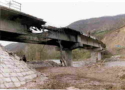 |
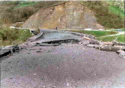 |
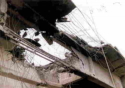 |
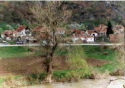 |
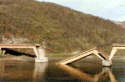 |
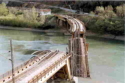 |
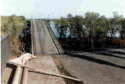 |
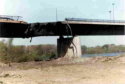 |
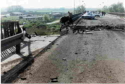 |
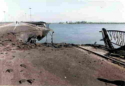 |
 |
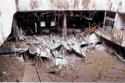 |
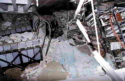 |
Ostružnica Railway Bridge
On
21 April 1999, at 1.40 p.m., the railway bridge "Ostružnica"
on the Sava river, connecting Surčin with Ostružnica was hit and damaged.
The bridge was damaged between the third and fourth metal arches, on
the Surčin side, as well as in the area of the
tenth concrete pillar. Both arch supporting pillars, steel structure
and 20 meters of carriageway were damaged.
On 23 April 1999, at 2.06 a.m., the railway bridge
"Sava" in Ostružnica was again targeted and damaged. Outside
pillar No. 1 was damaged as well as two parts of the house, the guard's
house, contact grid, dilatation equipment. Metal structure on pillar
No.7 caved in and fell into the water.
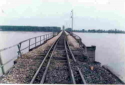 |
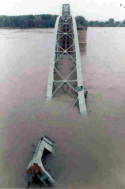 |